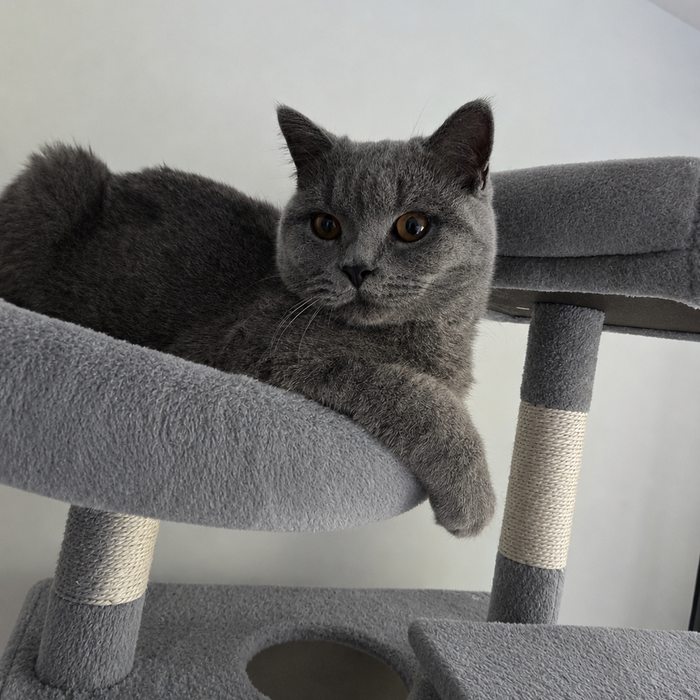
Affection does not always mean lap-sitting. Breed descriptions portray Maine Coons as sociable companions, but individual cats may choose a nearby chair, bed or floor spot instead. A cat who stays close without climbing onto you can still enjoy your company.

Notice the choice your cat makes
Look for voluntary approaches, relaxed time nearby and the places the cat returns to. Do not use lap-sitting as a test of whether the cat likes you. TICA's breed profile specifically describes companionship that may involve staying close rather than being carried or held.
Offer a nearby resting place
Choose a stable, accessible position beside where you spend time. Keep it clear of moving chairs and foot traffic. A bed should give the cat another comfortable choice, not become a place you repeatedly put them when they try to leave.
Let contact end when the cat chooses
Avoid holding a cat on your lap or lifting them back after they step away. Keep interactions calm and watch their response. The same principle applies when visitors expect a large, friendly-looking cat to welcome a cuddle.
Review a sudden change
If a cat who usually seeks contact begins avoiding it, or seems uncomfortable being touched, ask your vet. Do not explain every change as independence or a normal breed phase.
Explore The Velvet Nest for a nearby resting option, checking the usable size. Build the room around the kind of company your cat actually chooses.