


The Velvet Nest — Plush Rectangular Cat Bed, 4 Sizes
Recommended size: M
A plush place to curl up, with raised sides and a washable cover.
50 × 45 × 15 cm overall
£79.99 View productA roomy resting place, comfortable access and a manageable grooming routine are useful starting points for a RagaMuffin home. Here is how to compare furniture for your own cat, alongside an introduction to the breed.
Explore furniture for large cats
The RagaMuffin's development is connected to the Ragdoll, with breeders establishing a separate direction in the early 1990s. CFA accepted the breed for registration in 2003 and championship competition in 2011. RagaMuffins have a broad range of coat colours and patterns. They are recognised as a distinct breed, so a Ragdoll description is not a substitute for information about your cat. Read CFA's RagaMuffin profile.
CFA describes a medium-to-large cat with substantial bone structure and a full coat. It gives mature males reaching around 20lb (9.1kg) and females around 15lb (6.8kg) at the upper end, with growth taking up to four years. These are breed descriptions, not average weights or targets your cat should reach.
For shopping, record your cat's weight and measure their relaxed sleeping position. Check enclosed spaces separately: a tall tree can still contain a small cubby. Our size guide helps you compare those measurements with furniture.
RagaMuffins are known for affectionate companionship and can be playful. Individual preferences still matter. Offer short play sessions, scratching opportunities and quiet places to rest; let your cat choose when to interact. Introduce other pets gradually and supervise children, allowing the cat to retreat freely. A calm temperament does not remove the need for stimulation.
A soft, long coat still needs regular attention. Cats Protection recommends daily brushing for long-haired cats to help prevent tangles. Keep sessions gentle, check areas where fur rubs together and adapt the routine during shedding. Stop if grooming is painful. Tight mats or a change in grooming habits are reasons to seek professional advice; avoid cutting mats close to the skin with scissors.
Choose a complete food appropriate to your cat's life stage and monitor body condition as well as weight. Taking several years to mature does not mean a RagaMuffin should automatically remain on kitten food for four years. Follow the food's feeding guidance and discuss the transition to adult food, portions and any medical diet with your vet. See Cats Protection's feeding advice.
UC Davis lists RagaMuffins among the breeds appropriate for its R820W genetic test associated with hypertrophic cardiomyopathy (HCM). The test detects that particular variant; it is not a complete check of heart health. The laboratory's discussion of severe signs at one to two years relates to cats with two copies of the variant, not every RagaMuffin. Read the test's scope and interpretation.
Ask your vet which checks suit your cat's history and examination findings, and ask a breeder for the actual parental health reports rather than relying on a general “health tested” description. HCM assessment may involve heart ultrasound; a genetic result does not replace a veterinary assessment. Cornell explains HCM diagnosis.
| Purpose | Giant Paws options | What to check |
|---|---|---|
| Climbing and resting | The Highland Retreat, The Ultimate PawHouse and The Cream Estate — ask about this product | Usable platform dimensions, access routes, model-specific load limits and anchoring instructions. A ramp's presence alone does not establish easy access. |
| A separate bed | The Velvet Nest | Compare the selected size's usable sleeping area with your cat's relaxed position. Do not choose XL solely because of breed. |
| Litter facilities | The Bothy — ask about this product | Entrance and internal usable dimensions, plus the exact model's age, weight and operating requirements. |
| Grooming tools | The Cashmere Comb | Review the included tools and choose those suitable for your cat's coat and tolerance. Grooming tools do not replace professional mat removal. |
Check product pages for current prices and variants. If a measurement or specification you need is missing, contact Giant Paws before ordering. Koda Pod photos and product details are being checked for consistency, so confirm the exact version before considering that enclosed-bed option.
They have connected histories but are separately recognised breeds. RagaMuffins have a wider coat-colour and pattern range; individual size and temperament still vary.
Many enjoy company, but suitability depends on the individual cat and household. Supervise children's interactions, introduce pets gradually and provide undisturbed resting places.
Not automatically. Compare your cat's resting measurements with the usable sleeping area of the selected bed, including any space taken up by a raised rim.
Yes, discuss your cat's history and the relevance of genetic testing and heart assessment with your vet. The R820W test covers one genetic variant and cannot rule out all heart disease.
A little extra joy, every week
Give them a new favourite spot. Then share a photo of your cat with their Giant Paws purchase for a chance to win our £1,500 weekly draw.
Choose their favourite. Snap your cat. Enter the draw.
Shop for my cat →Already ordered? Send your photo →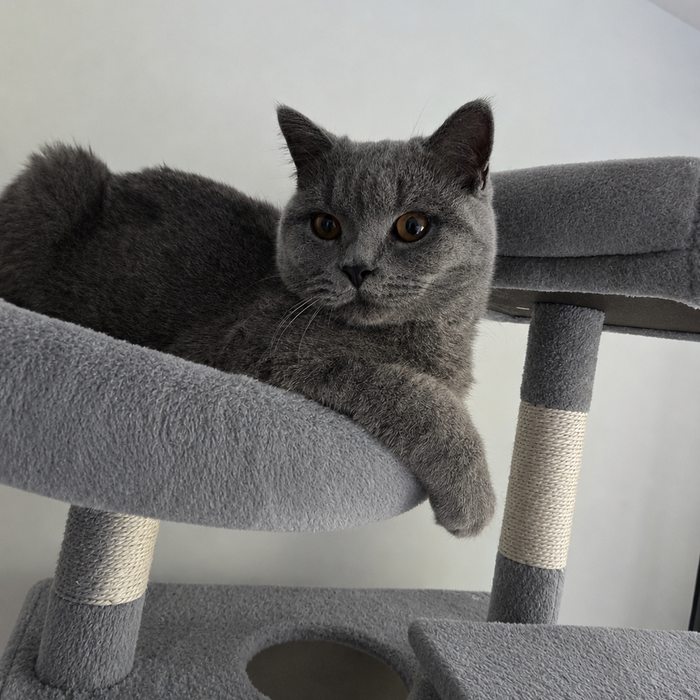


Find a new favourite for your cat. Tell us their size, your space and your budget.
1 of 3
Use this shortlist to compare. Check usable resting areas, full assembled dimensions and installation requirements on the product page before ordering.
A few other options to consider. The differences from your answers are shown on each card.
Other ideas for your cat. These may fall outside your size, space or budget choices.
Recommended size: M
A plush place to curl up, with raised sides and a washable cover.
50 × 45 × 15 cm overall
£79.99 View productRecommended size: L
A plush place to curl up, with raised sides and a washable cover.
64 × 53 × 17 cm overall
£89.99 View productRecommended size: XL
A plush place to curl up, with raised sides and a washable cover.
76 × 61 × 18 cm overall
£99.99 View productRecommended size: XXL
A plush place to curl up, with raised sides and a washable cover.
90 × 68 × 21 cm overall
£109.99 View productRecommended size: M
A soft, flat resting spot that is easy to place around your home.
40 × 50 cm
£19.99 View productRecommended size: L
A soft, flat resting spot that is easy to place around your home.
50 × 70 cm
£34.99 View productRecommended size: XL
A soft, flat resting spot that is easy to place around your home.
70 × 100 cm
£39.99 View productTwo condos and multiple resting spots, with a compact listed base.
60 × 50 cm base · 216 cm tall
£129.99 View productExtra choice for lounging and hiding, with two enclosed condos.
112 × 60 cm listed footprint · 185 cm tall
£204.99 View productA narrow base and floor-to-ceiling layout for climbing and perching.
40 × 40 cm base · requires a 240–280 cm ceiling
£369.99 View productShown option: Light Grey
£269.99 View product


