


The Velvet Nest — Plush Rectangular Cat Bed, 4 Sizes
Recommended size: M
A plush place to curl up, with raised sides and a washable cover.
50 × 45 × 15 cm overall
£79.99 View productBritish Longhairs combine a substantial build with a dense coat. When choosing a bed or cat tree, look beyond the fluffy outline: usable resting space, comfortable access and straightforward cleaning all deserve attention.
Explore furniture for large cats
The British Longhair shares the British Shorthair's stocky, muscular build and rounded appearance, with a longer coat. TICA lists adult females at 8–11lb (about 3.6–5kg) and males at 10–16lb (about 4.5–7.3kg). These are breed-reference ranges, not an individual cat's ideal weight. See TICA's British Longhair profile.
A thick coat can make it difficult to judge body shape visually. Use your cat's actual measurements for furniture and ask your vet about body condition rather than aiming for the top of a breed weight range.
British Longhairs are often described as calm companions who enjoy being nearby without necessarily wanting to be carried. Let your individual cat choose the amount of contact they enjoy. Introduce pets gradually, supervise children and provide quiet spaces where the cat can rest undisturbed.
A quieter home or flat can offer a suitable environment if it meets the cat's needs. Room size alone does not settle suitability: think about play, scratching, resting places and access to separate resources. Do not assume a cat will tolerate long absences simply because the breed is described as independent.
Plan regular, gentle coat care. The RSPCA notes that many long-haired cats need daily grooming to prevent knots. Keep sessions short, check areas prone to tangles and stop if your cat becomes distressed. Sore skin, a changed coat or difficult matting calls for professional advice. Do not cut mats close to the skin with scissors.
A fixed bath every month or two is not a routine this guide recommends. Ask your vet or groomer about any specific coat-cleaning need rather than bathing to a calendar.
Choose a complete food appropriate to life stage, provide fresh water and monitor portions alongside body condition and activity. If weight changes or your cat needs a medical diet, consult your vet. Cats Protection explains everyday feeding.
Offer play and scratching for enjoyment as well as movement. Try short interactive sessions and comfortable routes between resting spots. A cat who usually prefers low platforms may still value a raised lookout; follow their preferences and abilities rather than prescribing a height from breed alone.
Discuss routine preventive care and any relevant family health history with your vet. This guide does not rank one condition as every British Longhair's biggest risk or prescribe a universal heart-screening interval. If your cat starts avoiding a previously comfortable jump, changes grooming habits or seems less active, seek advice rather than assuming it is temperament.
Use our size guide to record your measurements. If a specification is missing, ask Giant Paws before ordering.
| Purpose | Options | Selection tip |
|---|---|---|
| Climbing and resting | The Cat-Cave and The Cream Estate — ask about this product | Compare usable platforms and access. A ramp alone does not establish that a model suits limited mobility. |
| Litter facilities | The Gentleman's Abode — ask about this product and The Dome | Check internal space and entry height, plus model-specific age, weight and operating requirements for any automatic option. |
| A separate bed | The Velvet Nest | Choose from measured sleeping space rather than assuming a British Longhair needs M, L or XL. |
| Coat care | The Cashmere Comb | Review the individual tools and their suitability for your cat's coat and grooming tolerance. |
Product pages show current prices and available variants. These comparisons are starting points, not a guarantee that every product fits every British Longhair.
TICA describes the breed as medium to large. Individual size varies, so check your cat's measurements and body condition rather than relying on the breed label.
Plan regular gentle grooming; many long-haired cats need daily attention to prevent knots. Adapt to the coat and seek help for painful or tight mats.
A flat can work when it provides appropriate resources, enrichment and comfortable resting places. Suitability depends on the individual cat's needs and the household routine.
Choose access and platform sizes around your cat's abilities. Some prefer lower resting spots, but breed alone does not determine an appropriate tree height.
A little extra joy, every week
Give them a new favourite spot. Then share a photo of your cat with their Giant Paws purchase for a chance to win our £1,500 weekly draw.
Choose their favourite. Snap your cat. Enter the draw.
Shop for my cat →Already ordered? Send your photo →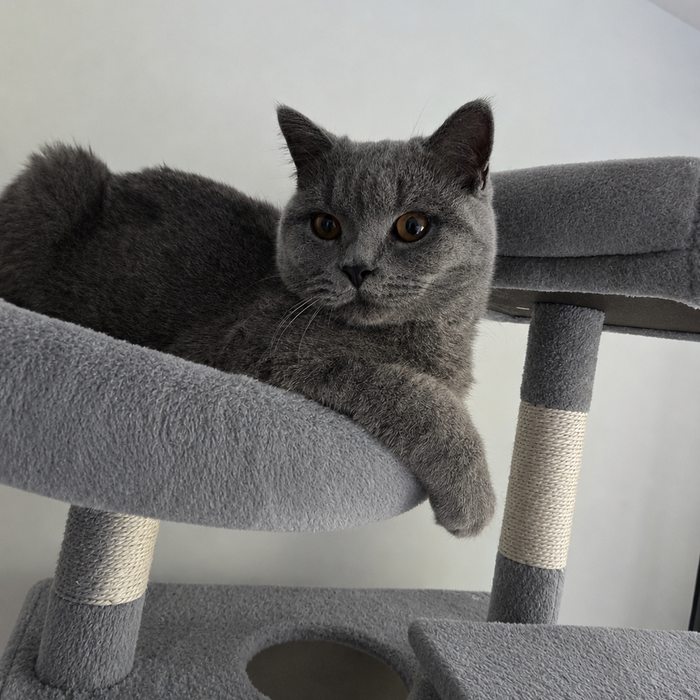


Find a new favourite for your cat. Tell us their size, your space and your budget.
1 of 3
Use this shortlist to compare. Check usable resting areas, full assembled dimensions and installation requirements on the product page before ordering.
A few other options to consider. The differences from your answers are shown on each card.
Other ideas for your cat. These may fall outside your size, space or budget choices.
Recommended size: M
A plush place to curl up, with raised sides and a washable cover.
50 × 45 × 15 cm overall
£79.99 View productRecommended size: L
A plush place to curl up, with raised sides and a washable cover.
64 × 53 × 17 cm overall
£89.99 View productRecommended size: XL
A plush place to curl up, with raised sides and a washable cover.
76 × 61 × 18 cm overall
£99.99 View productRecommended size: XXL
A plush place to curl up, with raised sides and a washable cover.
90 × 68 × 21 cm overall
£109.99 View productRecommended size: M
A soft, flat resting spot that is easy to place around your home.
40 × 50 cm
£19.99 View productRecommended size: L
A soft, flat resting spot that is easy to place around your home.
50 × 70 cm
£34.99 View productRecommended size: XL
A soft, flat resting spot that is easy to place around your home.
70 × 100 cm
£39.99 View productTwo condos and multiple resting spots, with a compact listed base.
60 × 50 cm base · 216 cm tall
£129.99 View productExtra choice for lounging and hiding, with two enclosed condos.
112 × 60 cm listed footprint · 185 cm tall
£204.99 View productA narrow base and floor-to-ceiling layout for climbing and perching.
40 × 40 cm base · requires a 240–280 cm ceiling
£369.99 View productShown option: Light Grey
£269.99 View product


