


The Velvet Nest — Plush Rectangular Cat Bed, 4 Sizes
Recommended size: M
A plush place to curl up, with raised sides and a washable cover.
50 × 45 × 15 cm overall
£79.99 View productChoosing furniture for a Turkish Van starts with your cat's measurements and habits. This guide covers the breed's character, everyday care and the checks to make before buying a tree, bed or litter tray.
Explore furniture for large cats
The Turkish Van is a muscular, semi-longhaired breed associated with eastern Turkey. Its familiar Van pattern combines a mainly white body with coloured head and tail markings. TICA describes males as large and females as medium to large; full development can take three to five years. These descriptions are context, not a target weight for an individual cat. Read TICA's breed profile.
Vans are often active, playful and interested in climbing. Affection does not necessarily mean enjoying being picked up. Let your cat initiate contact, provide quiet resting places and introduce other pets gradually. A breed label cannot tell you how long an individual will comfortably tolerate being alone.
Water play is part of the breed's reputation, not a requirement for keeping one. Follow your cat's preferences: never put them in water to test whether they can swim. Keep deep water inaccessible. Interactive toys, scratching surfaces and accessible climbing routes offer other ways to engage your cat.
TICA suggests weekly combing for the Turkish Van, while Cats Protection's general long-haired grooming advice recommends daily brushing. Check your cat's coat regularly and increase gentle grooming when shedding or tangles require it. A coat described as easy-care can still need attention. Do not pull at tight mats or cut close to the skin with scissors; ask your vet or a suitable groomer for help.
Choose a complete food suitable for your cat's life stage, provide fresh drinking water and adjust portions with your vet's help if weight or body condition changes. Slow breed maturation does not mean feeding kitten food until five years old. See Cats Protection's feeding guidance.
Discuss preventive care, dental care and any appropriate health checks with your vet. This shopping guide cannot prescribe a heart-screening schedule or identify every health risk. If your cat's eating, movement or usual behaviour changes, seek veterinary advice.
Use our size guide to organise your measurements. If an internal dimension or load limit is missing, ask us before ordering.
| What you need | Products to explore | Check before buying |
|---|---|---|
| Climbing and resting | The Cat-Cave, The Ultimate PawHouse and The Taj-MeowHall | Usable platforms, enclosed-space dimensions, access and model-specific assembly instructions. |
| A separate bed | The Velvet Nest | The selected variant's sleeping area against your cat's resting position. |
| Litter facilities | The Bothy — ask about this product and The Dome | Entrance and internal usable space; confirm all age, weight and operating requirements for any automatic model. |
| Scratching | Scratch Central | Surface dimensions and your cat's preferred scratching position. |
These are options to compare, not a guarantee that every model fits every Turkish Van. Open the product page for current prices and available variants.
The breed has a reputation for water play, but let your own cat choose whether to approach water. Do not force swimming or bathing, and keep access to deep water secured.
Compatibility depends on the individual cat and how children interact with them. Supervise introductions, teach gentle handling and provide somewhere the cat can retreat without being followed.
TICA describes males as large and females as medium to large. Measure your own cat for furniture rather than choosing from a breed-average weight.
Check the coat regularly and adapt grooming to tangles and seasonal shedding. TICA suggests weekly combing for this breed; Cats Protection recommends daily brushing for long-haired cats generally. Use short, gentle sessions and seek help with tight mats.
A little extra joy, every week
Give them a new favourite spot. Then share a photo of your cat with their Giant Paws purchase for a chance to win our £1,500 weekly draw.
Choose their favourite. Snap your cat. Enter the draw.
Shop for my cat →Already ordered? Send your photo →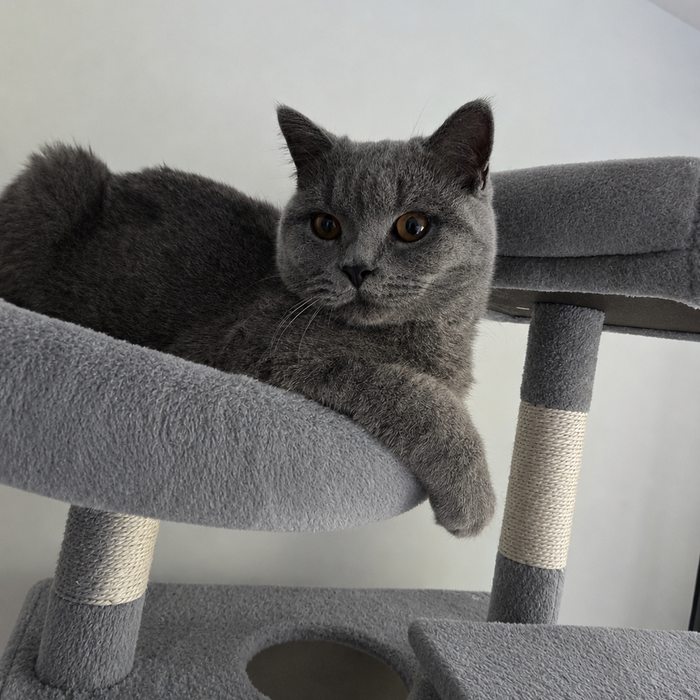


Find a new favourite for your cat. Tell us their size, your space and your budget.
1 of 3
Use this shortlist to compare. Check usable resting areas, full assembled dimensions and installation requirements on the product page before ordering.
A few other options to consider. The differences from your answers are shown on each card.
Other ideas for your cat. These may fall outside your size, space or budget choices.
Recommended size: M
A plush place to curl up, with raised sides and a washable cover.
50 × 45 × 15 cm overall
£79.99 View productRecommended size: L
A plush place to curl up, with raised sides and a washable cover.
64 × 53 × 17 cm overall
£89.99 View productRecommended size: XL
A plush place to curl up, with raised sides and a washable cover.
76 × 61 × 18 cm overall
£99.99 View productRecommended size: XXL
A plush place to curl up, with raised sides and a washable cover.
90 × 68 × 21 cm overall
£109.99 View productRecommended size: M
A soft, flat resting spot that is easy to place around your home.
40 × 50 cm
£19.99 View productRecommended size: L
A soft, flat resting spot that is easy to place around your home.
50 × 70 cm
£34.99 View productRecommended size: XL
A soft, flat resting spot that is easy to place around your home.
70 × 100 cm
£39.99 View productTwo condos and multiple resting spots, with a compact listed base.
60 × 50 cm base · 216 cm tall
£129.99 View productExtra choice for lounging and hiding, with two enclosed condos.
112 × 60 cm listed footprint · 185 cm tall
£204.99 View productA narrow base and floor-to-ceiling layout for climbing and perching.
40 × 40 cm base · requires a 240–280 cm ceiling
£369.99 View productShown option: Light Grey
£269.99 View product


