


The Velvet Nest — Plush Rectangular Cat Bed, 4 Sizes
Recommended size: M
A plush place to curl up, with raised sides and a washable cover.
50 × 45 × 15 cm overall
£79.99 View productRagdolls are known for their affectionate nature and substantial size. Choosing furniture for one means looking beyond the breed description to the individual cat’s measurements, resting habits and access needs.
Explore the Large & Giant Breed Collection →
CFA’s Ragdoll profile traces the breed to Ann Baker’s work in California in the 1960s. It describes a large, affectionate cat with a semi-long coat and generally calm temperament. Individual preferences still vary: friendliness does not mean a cat enjoys every kind of handling.
CFA specifically notes that going limp when held is not typical of most modern Ragdolls. Support your cat comfortably and let it move away; do not use the breed’s name as a handling test.
CFA describes slow maturity, with full size and weight around four years, and notes that mature males may reach or exceed 20 lb (about 9.1 kg), while females are usually smaller. That is breed context, not an ideal-weight target or a prediction of your kitten’s final size.
Record your cat’s current measurements and preferred sleeping position. Recheck them during growth. A table of assumed shoulder heights or a male/female label cannot establish how much usable platform space, bed interior or litter-tray room an individual needs.
Our Ragdoll size guide focuses on the measurements to compare before ordering.
Make regular coat checks part of your routine, paying attention to areas that are difficult to see. Cats Protection’s long-haired grooming guidance recommends daily brushing. Adapt the tools and gentle handling to your cat’s coat and tolerance; ask for help if necessary care is becoming difficult.
Do not pull through tight mats or cut them away with scissors. Ask your vet about removal, especially for matting close to the skin, discomfort or a new change in grooming. The Cashmere Comb set contains several care accessories, but not every tool is appropriate for every task.
Choose a complete food for the appropriate life stage and review portions against body condition and individual needs. Slow breed maturity is not by itself a reason to feed kitten food for several extra years. Use the selected food’s guidance and your vet’s advice; Cats Protection’s feeding guide explains the basics.
Provide opportunities for play, scratching and exploration alongside undisturbed rest. Do not assume that a calm cat needs no activity or that weight gain proves boredom. New changes in appetite, activity or weight deserve attention rather than an automatic furniture purchase.
UC Davis Veterinary Genetics Laboratory describes the Ragdoll MYBPC3 variant R820W, which is associated with increased risk of hypertrophic cardiomyopathy (HCM). A DNA result addresses that variant; it does not show the current structure of the heart or exclude all heart disease.
Ask breeders for the actual parental laboratory reports and heart-screening records. Discuss the results and an appropriate examination or screening plan with your vet. This page does not set a universal age to begin cardiac scans.
Urinary problems are not limited to Ragdolls. Cats Protection explains that a blocked bladder is life-threatening. Repeated straining with little or no urine, especially with distress, needs urgent veterinary advice. Do not wait to see whether a new tray or more drinking resolves it.
Consider the particular cat’s history, behaviour and home environment when planning indoor life or secure outdoor access. A breed stereotype does not establish that every flat, family or multi-pet arrangement will suit. Provide accessible resting choices and separate resources in shared homes, and introduce animals gradually.
Use the Giant Paws furniture size guide and request missing measurements before ordering. Product pages show current prices and available options.
No. CFA explains that the behaviour associated with the breed’s name is not typical of most modern Ragdolls. Handle each cat according to its comfort and do not expect it to tolerate being held.
Not simply because the breed matures slowly. Choose food for the appropriate life stage and discuss growth, portions and body condition with your vet.
No. The Ragdoll test checks the R820W variant associated with increased HCM risk. It does not examine the heart or rule out all causes of heart disease. Ask your vet about examination and screening.
Measure the individual cat and compare usable sleeping areas, entrances and access routes. Check the exact product’s installation and operating limits; neither sex nor a large-breed label establishes fit.
A little extra joy, every week
Give them a new favourite spot. Then share a photo of your cat with their Giant Paws purchase for a chance to win our £1,500 weekly draw.
Choose their favourite. Snap your cat. Enter the draw.
Shop for my cat →Already ordered? Send your photo →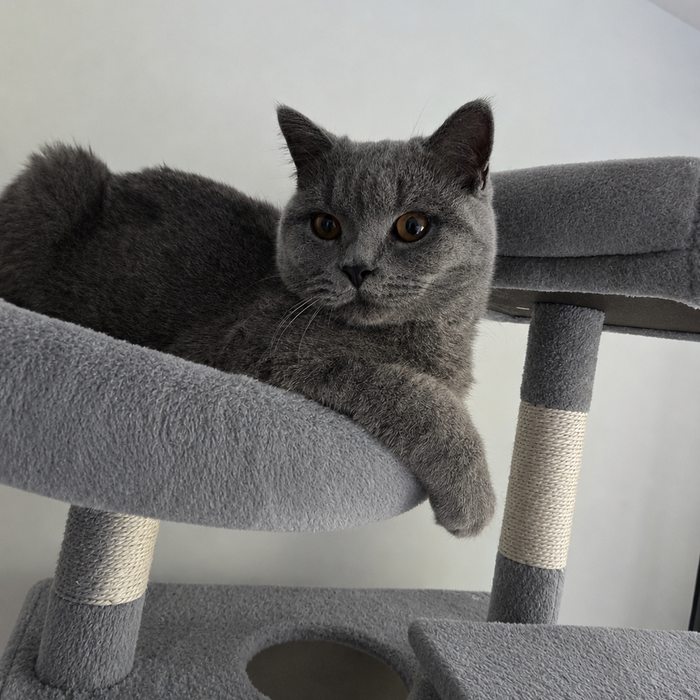


Find a new favourite for your cat. Tell us their size, your space and your budget.
1 of 3
Use this shortlist to compare. Check usable resting areas, full assembled dimensions and installation requirements on the product page before ordering.
A few other options to consider. The differences from your answers are shown on each card.
Other ideas for your cat. These may fall outside your size, space or budget choices.
Recommended size: M
A plush place to curl up, with raised sides and a washable cover.
50 × 45 × 15 cm overall
£79.99 View productRecommended size: L
A plush place to curl up, with raised sides and a washable cover.
64 × 53 × 17 cm overall
£89.99 View productRecommended size: XL
A plush place to curl up, with raised sides and a washable cover.
76 × 61 × 18 cm overall
£99.99 View productRecommended size: XXL
A plush place to curl up, with raised sides and a washable cover.
90 × 68 × 21 cm overall
£109.99 View productRecommended size: M
A soft, flat resting spot that is easy to place around your home.
40 × 50 cm
£19.99 View productRecommended size: L
A soft, flat resting spot that is easy to place around your home.
50 × 70 cm
£34.99 View productRecommended size: XL
A soft, flat resting spot that is easy to place around your home.
70 × 100 cm
£39.99 View productTwo condos and multiple resting spots, with a compact listed base.
60 × 50 cm base · 216 cm tall
£129.99 View productExtra choice for lounging and hiding, with two enclosed condos.
112 × 60 cm listed footprint · 185 cm tall
£204.99 View productA narrow base and floor-to-ceiling layout for climbing and perching.
40 × 40 cm base · requires a 240–280 cm ceiling
£369.99 View productShown option: Light Grey
£269.99 View product


