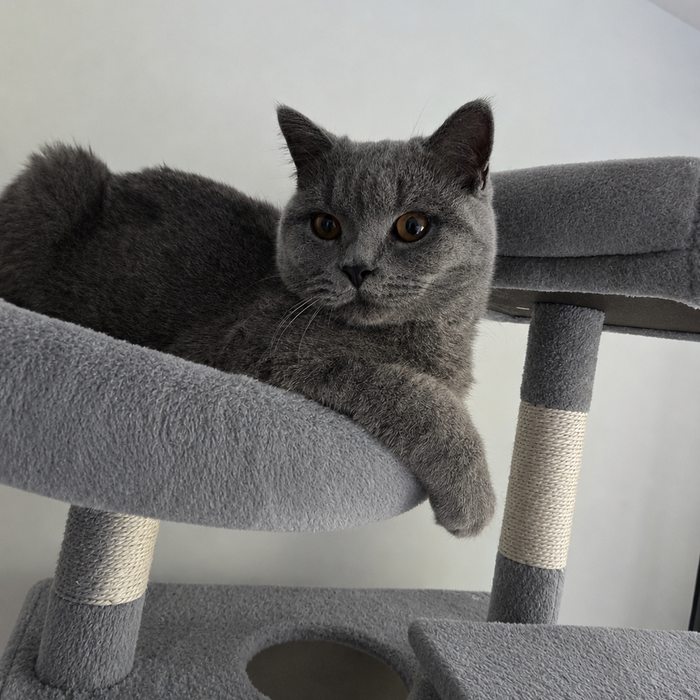
No. Cats need some light to see. They can make better use of dim light than people, but complete darkness is different from a room lit faintly by a window. Seeing your cat move confidently at night does not mean their eyes work without any light.
Why dim light goes further for a cat
Cats Protection explains that cats have light-sensitive rod cells, pupils that open widely and a reflective layer called the tapetum. This layer gives incoming light another opportunity to be detected. It also helps explain the familiar shine when light catches a cat's eyes.
The shine is reflected light, not light being generated by the eyes. There is no need to shine a torch at your cat to test it, and a photograph of glowing eyes is not a home vision assessment.
What you cannot tell from an evening photograph
A phone may brighten a dim room automatically. Your screen therefore does not show exactly what your cat saw, or even how dark the room looked to you. Likewise, a dark photograph does not establish that the room contained no usable light.
When describing a concern to your vet, record the actual conditions: curtains open or closed, which lights were on, whether the route was familiar and what behaviour changed. “Hesitated at the doorway after the hall light went off” is more informative than “cannot see at night”. It is an observation, not a diagnosis.
Good vision does not make every route safe
A cat's ability to detect a platform is separate from the platform being secure, large enough or reachable. A tower such as The Cream Estate still needs appropriate installation and individual fit checks. Low-light eyesight cannot compensate for a loose fitting or an unsuitable jump.
Avoid rearranging obstacles to test navigation. Let the cat use familiar routes normally, and make planned room changes with their access in mind. Our vertical-space guide looks at accessible perches rather than height alone.
Does every cat need a night-light?
This explanation does not establish a universal lighting requirement. Rooms and individual cats differ. If your cat has known sight difficulties, follow their veterinary team's advice on the environment. New hesitation, collisions or other changes should not simply be attributed to ageing or a breed's habits.
The useful distinction is straightforward: cats have adaptations for low light, not an exemption from darkness or from ordinary furniture safety.
Source checked 12 September 2026.