A cat who coughs should be assessed by a vet, particularly when episodes repeat. If breathing is fast, noisy or laboured, the mouth is open, the gums look pale or blue, or the cat collapses, seek emergency care immediately.

Record the movement if it is safe
PDSA lists coughing among signs of breathing problems. A short video can help the clinic distinguish coughing from retching or reverse sneezing. Do not delay travel, chase the cat or provoke another episode merely to obtain a recording.
Note the surrounding facts
Write down the episode’s duration, frequency and time, plus appetite, energy, nasal discharge and any recent exposure to smoke, aerosols, dust or new products. Tell the vet about medicines and existing conditions. Avoid diagnosing asthma or hairballs from posture alone.
Reduce stress while arranging care
Keep the room quiet and comfortably cool, prevent strenuous play and prepare the carrier calmly. Do not give a human cough medicine, inhaler or leftover prescription. If the cat is struggling to breathe, minimise handling and follow the emergency clinic’s travel instructions.
Keep observation spaces accessible
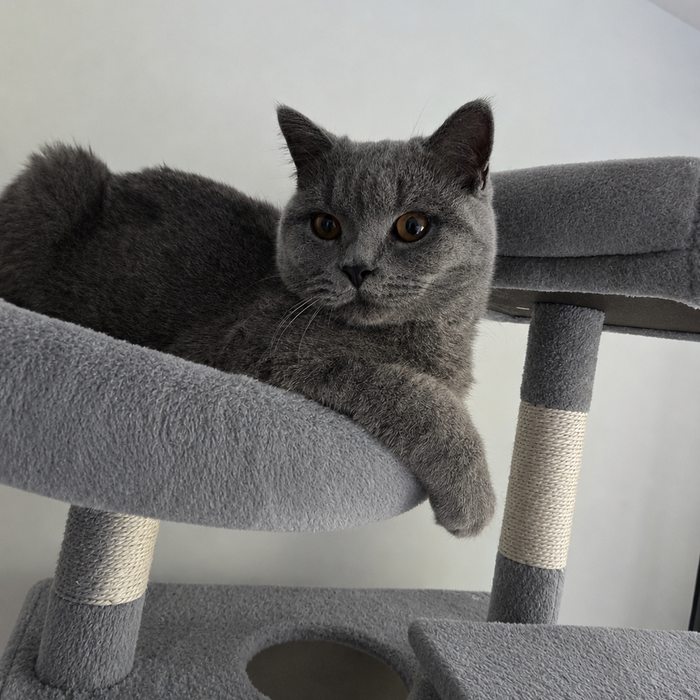
An open, familiar rest such as the Koda Pod may be used only while waiting for routine advice if the cat can be seen clearly. Never block the entrance or let a hide delay emergency assessment.
Sources and further reading
Guidance checked 13 September 2026.