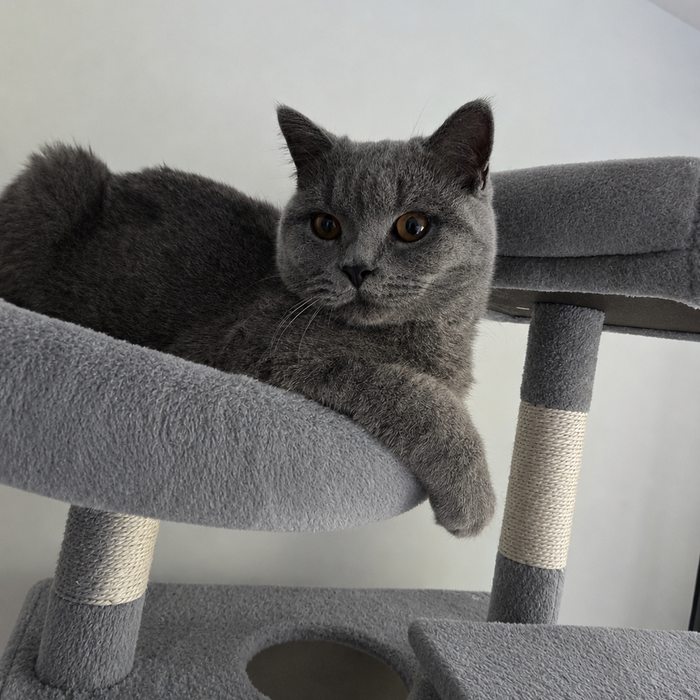
Whisker position is one part of a cat’s body language, not a stand-alone mood label. Whiskers may sit neutrally, angle forward during focused interest or draw back when a cat is tense.

Match the whiskers to the activity
A cat tracking a toy may point whiskers forward with ears and eyes focused on movement. A cat withdrawing from contact may pull them closer to the face while becoming still or turning away. The same position can appear in more than one context.
Look beyond the face
- Is the body loose or crouched?
- Are the ears neutral, rotating or flattened?
- Can the cat leave easily?
- What happened immediately before?
Do not trim whiskers or repeatedly brush them aside. Our guide on why whiskers should not be trimmed covers their sensory role.
When appearance changes
Broken whiskers can occur naturally, but skin changes, facial pain or a sudden reluctance to eat warrants veterinary advice. For whole-body interpretation, see Cats Protection’s behaviour resources and our stroking consent guide.