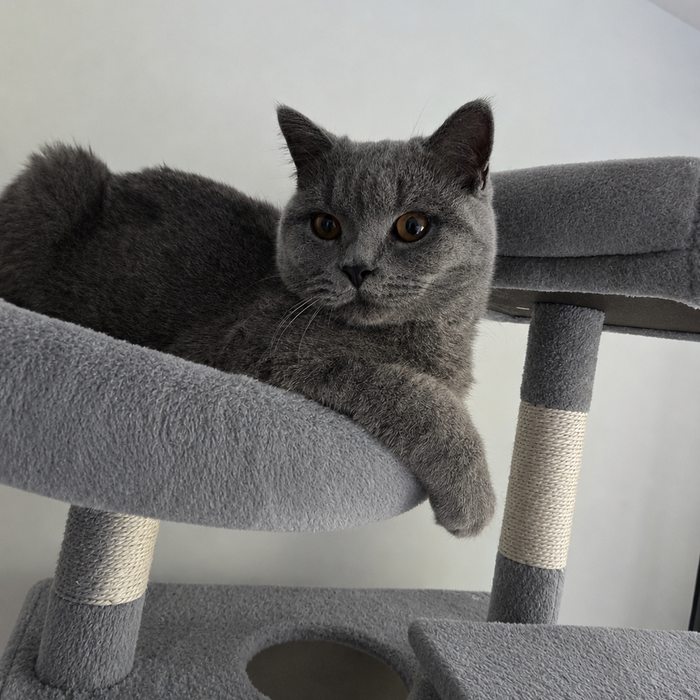
Direct answer: look at the visible outer ear in good light while the cat is relaxed. Do not insert cotton buds, liquids or tools into the ear canal unless a vet has instructed you.

Compare both ears
Notice redness, swelling, discharge, strong smell, crusting or parasites, and whether the cat shakes the head or scratches.
Stop if the cat is sore
Pain, sudden sensitivity or loss of balance needs veterinary advice. Do not keep handling the ear to obtain a better look.
Make checks part of gentle grooming
A brief glance during a calm grooming session is enough. Regular observation makes genuine changes easier to recognise.
A practical furniture note: The Cashmere Comb can support this routine where its current specifications suit your cat and room. Product furniture cannot diagnose or treat a health or behaviour problem.