Direct answer: supervise the interaction, ask the child to stay calm and let the cat approach. Gentle strokes should stop as soon as the cat turns away, tenses, flicks the tail or tries to leave.

Make three simple rules
Do not chase, lift or corner the cat. Leave them alone while eating, toileting, sleeping or hiding. Use quiet voices and slow hands.
Show the child where to touch
Many cats accept gentle strokes around the cheeks, head or back, but preference is individual. Avoid pulling tails, touching paws or treating a belly display as an invitation.
Protect both sides of the interaction
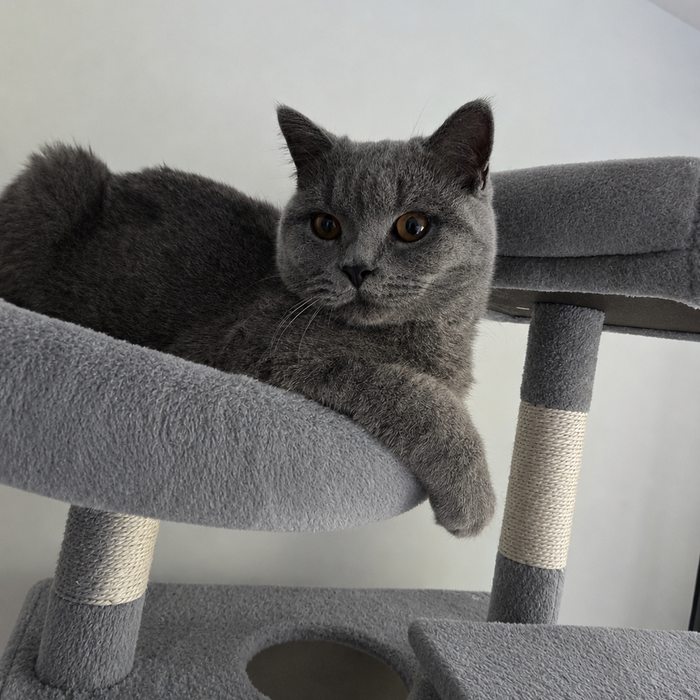
Provide high and enclosed places the child cannot invade. An adult should step in before either cat or child becomes overexcited; scratches or bites need appropriate first aid and medical advice.
Where furniture helps: The Koda Pod may support this part of the routine. Check the live product page for current specifications and suitability; furniture does not replace veterinary or behaviour advice.