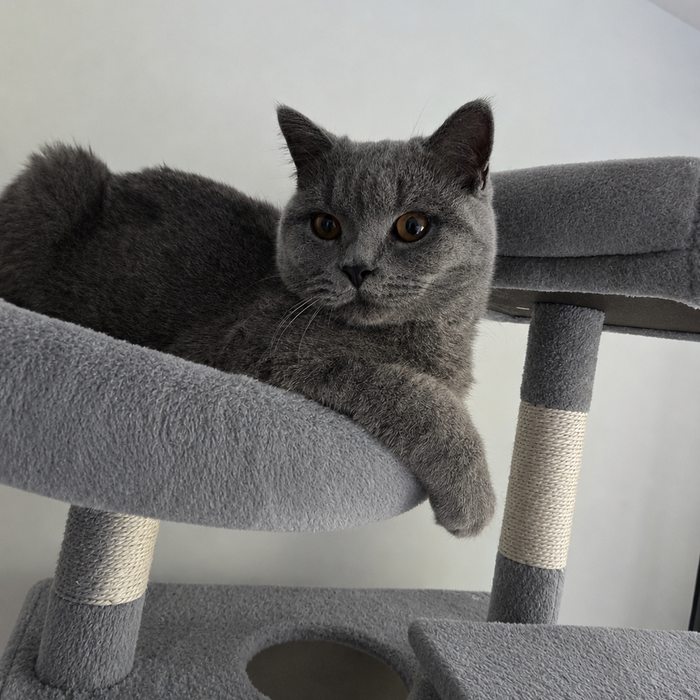
Not necessarily. Some cats enjoy a particular feline companion; others are more comfortable as the only cat. A second cat is not an automatic solution to a busy owner's absence, and a sociable breed description cannot predict whether two individuals will get along.
Ask about relationships, not just temperament labels
Cats Protection's guidance on getting another cat distinguishes genuine social relationships from simple tolerance. Cats that seek each other out, rest touching, groom one another or rub together may share a social bond. Merely occupying the same room is less informative.
Write down what you actually know about your cat. Have they lived comfortably with a specific cat before? Did they choose contact, or generally keep away? If adopting, ask the rescue about observations over time rather than relying on one photograph of two animals side by side.
Check the reason for wanting a second cat
It can help to separate two questions: “Would I like another cat?” and “Is another cat likely to suit my current cat?” Both matter. If the main concern is a change in behaviour or reduced activity, seek advice about that concern first instead of treating an adoption as a remedy.
Human company, play and dependable care remain your responsibility when there are two cats. A new arrival should not be expected to entertain an existing cat throughout the working day.
Make a realistic capacity check
- Can you provide separate spaces while introductions progress?
- Can each cat reach essential resources without passing the other?
- Can you manage different diets, preferences or activity levels if needed?
- Can the household fund and provide ongoing care for both individuals?
- What support will the rescue or breeder provide if settling-in is difficult?
There is no useful answer based only on the number of rooms or the height of a tower. The RSPCA's introduction guidance calls for multiple resources so cats do not have to share. A shared structure does not remove the need for independent choices. Our multi-cat household guide covers the resource-planning stage.
Do not choose only by sex or breed
Cats Protection emphasises personality, age, experiences and other individual factors rather than assuming a male or female companion is universally preferable. A quiet older cat and an energetic kitten may want very different interactions. Previous success with one companion does not guarantee acceptance of a stranger.
If a rescue identifies an established bonded pair and you have no resident cat, ask what it has observed and what keeping that pair together involves. That is a different decision from adding an unfamiliar cat to your current cat's home.
Decide on the animals before buying shared furniture. Even cats that get along need ways to rest apart; a separate bed such as The Velvet Nest is one possible resource, not evidence that a particular pairing will work. Choosing to remain a one-cat household can be a thoughtful outcome.
Welfare guidance checked 12 September 2026.