Do not assume every unfamiliar cat is abandoned. First look for immediate danger or injury, observe from a safe distance and gather useful information. If the cat appears unwell, injured or at urgent risk, contact a vet or appropriate local animal service promptly.
Record what you actually know
Note the location, date, time, appearance and behaviour. Take a clear photograph if you can do so without frightening or pursuing the cat. Ask nearby neighbours whether they recognise it; many owned cats visit several gardens.
A collar can offer information, but the absence of one does not prove there is no owner. Do not publish your full home address or hand the cat to an unverified claimant solely because they respond first.
Use local lost-and-found routes
Cats Protection’s stray-cat guidance explains ways to check for an owner and obtain local help. Contact nearby veterinary practices, rescue organisations and community lost-pet services. Give the same precise description and location to each.
If the cat is friendly and can be handled safely, a vet or rescue may be able to scan for a microchip. Phone before travelling so you know when, where and how they can help.
Do not improvise unsafe transport
Use a secure, ventilated carrier if a responsible organisation asks you to bring the cat in. Do not travel with an unfamiliar cat loose in the car. If the cat will not enter safely, ask the organisation for guidance rather than chasing or grabbing it.
If temporary shelter is advised
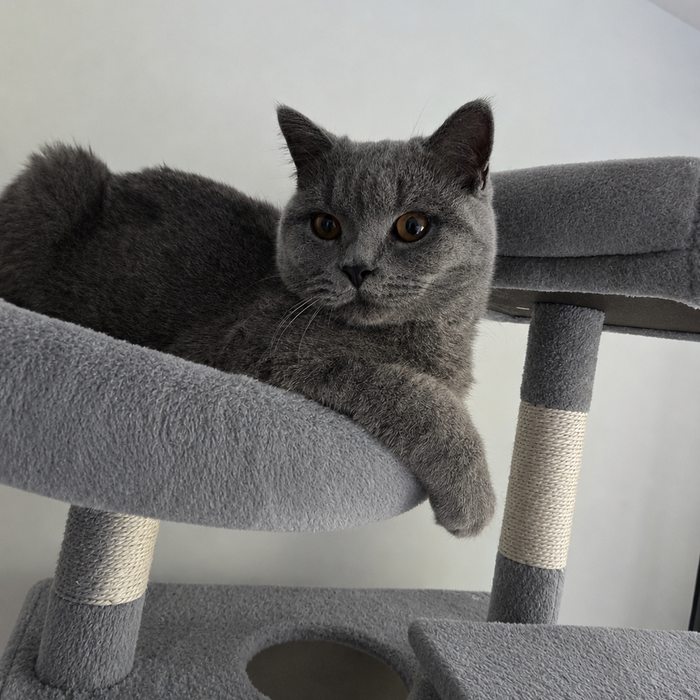
Keep the unfamiliar cat separate from resident animals, with secure doors and species-appropriate essentials, until professional advice is available. The pictured Koda Pod is ordinary cat furniture, not a secure carrier, quarantine enclosure or rescue facility.
Avoid giving medicines or using parasite products without veterinary direction. If you offer food while arranging help, tell the organisation what and how much was given.
Make ownership checks careful
Ask a claimant for details that are not obvious from your public post, such as distinctive markings, sex, microchip information or photographs. Let a vet, database or rescue follow its identity process.
Direct answer: observe, document, check locally and involve an appropriate professional; do not make ownership or medical assumptions from appearance alone.
Guidance checked 12 September 2026.