If you use a laser pointer, keep the beam away from eyes, mirrors, windows and unsafe climbing routes. Make the session brief and finish by directing the cat to a physical toy or part of its measured food allowance that it can actually catch.

Control the route before switching it on
Close unsafe windows and remove breakables. Keep the dot on the floor or low, stable surfaces rather than sending the cat up curtains, across stairs or into another animal. Never point the beam at any person or animal, even for a moment.
Allow a complete ending
Research on laser-light play notes that the light itself cannot be caught. Guide the final chase to a familiar toy, then switch off the laser and let the cat grab and kick that object. A small food reward can come from the daily ration if food is appropriate for that cat.
Watch the individual response
Stop if the cat continues searching anxiously, vocalises, fixates on reflections or seems unable to settle. Some cats simply do better with wand, ball or food-search games from the outset. More speed and longer sessions are not automatically better enrichment.
Offer tangible independent play
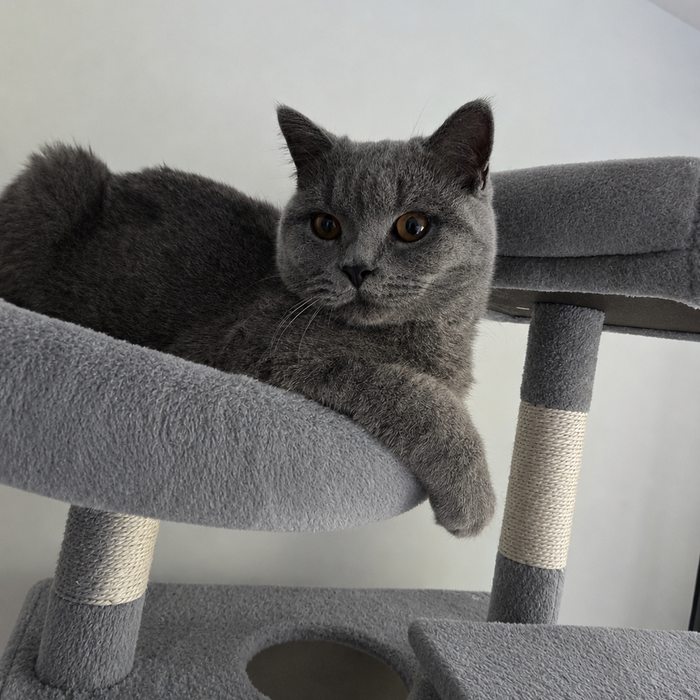
A physical play surface such as the Paw-villian gives the cat objects and textures it can contact. Inspect all attachments before use and remember that no product replaces supervised interactive play suited to the individual.
Sources and further reading
Guidance checked 13 September 2026.