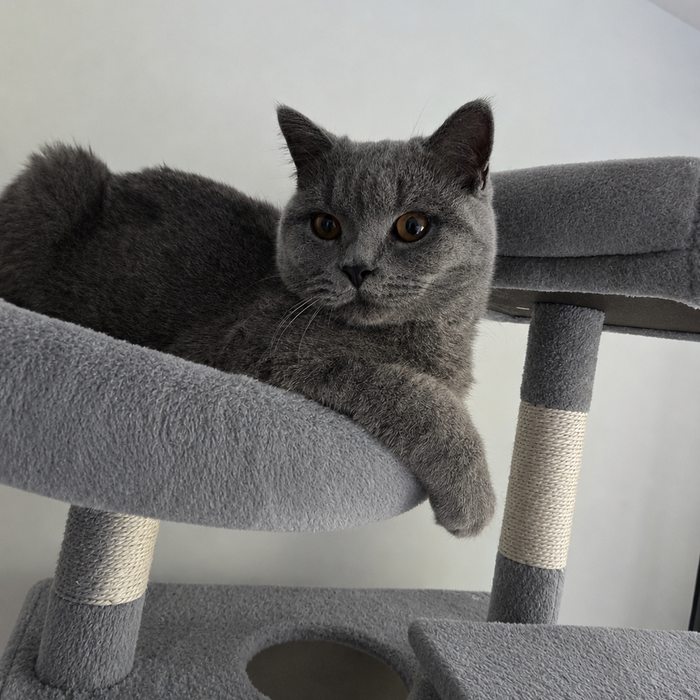
The GCCF notes that Maine Coons can learn to open doors. If your cat has discovered a handle, the practical question is what lies beyond it. Review the household access plan rather than treating the behaviour only as a clever trick.

Identify the rooms and cupboards affected
Check where the cat can now reach medicines, cleaning products, appliances or an outside exit. Do not assume a door that looks closed is secure. Use an appropriate reliable closure that remains suitable for household safety and access.
Check nearby climbing aids
A tower, chair or shelf may help the cat reach a handle they could not reach from the floor. Review the whole route before moving furniture into a new position. Do not create access to an external door or hazardous cupboard as an accidental side effect.
Keep essential resources available
Securing one area should not remove the cat's only route to water, litter or a resting place. Update the household plan and tell every carer which closures matter. Avoid using confinement as a punishment for exploration.
Offer suitable activity
Keep appropriate play and exploration opportunities in accessible rooms. A new piece of furniture is not a guarantee that door-opening will stop. If the behaviour is accompanied by distress or a marked change, seek advice rather than continually adding obstacles.
When planning ready-to-order furniture or a bespoke layout, include handles, cupboards and exits on the room sketch.