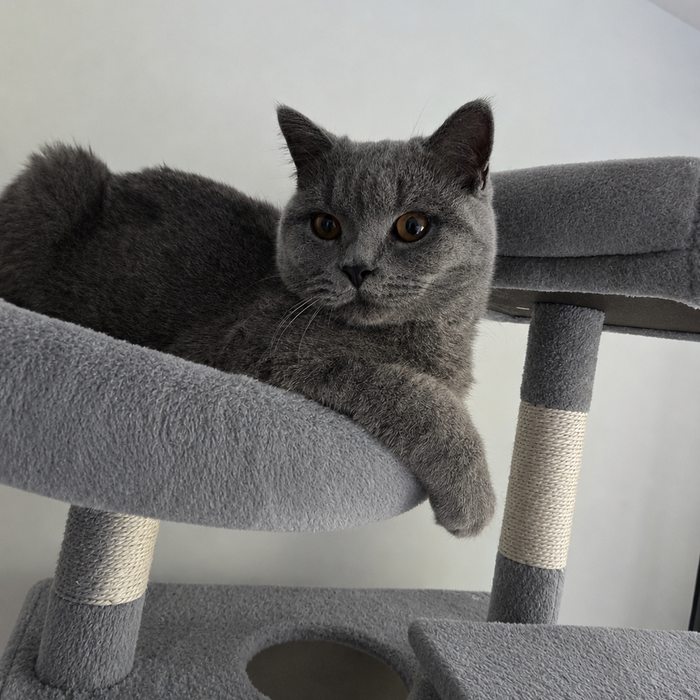
Give an indoor Ocicat varied opportunities to stalk, chase, climb, scratch, learn and rest, while adjusting duration and height for the individual cat. More activity does not mean continuous stimulation.

Use several types of activity
TICA describes the Ocicat as muscular, athletic and curious. Rotate wand play, food-search games, simple reward-based training and independent toys rather than relying on one intense session.
Build a safe climbing route
Place stable furniture where take-off and landing areas stay clear. Avoid routes over cookers, open windows or fragile shelves. Follow assembly and anchoring guidance, and check platforms for wear.
Let the cat opt out
Provide an enclosed or quiet resting place away from the main play route. Watch for tail lashing, flattened ears, hiding or walking away. End the interaction before excitement turns into conflict.
Match furniture to measurements
The Ultimate PawHouse offers a large activity structure. Compare its current product dimensions and features with the room and cat; breed reputation alone is not a fit test.
Sources and further reading
Guidance checked 13 September 2026.