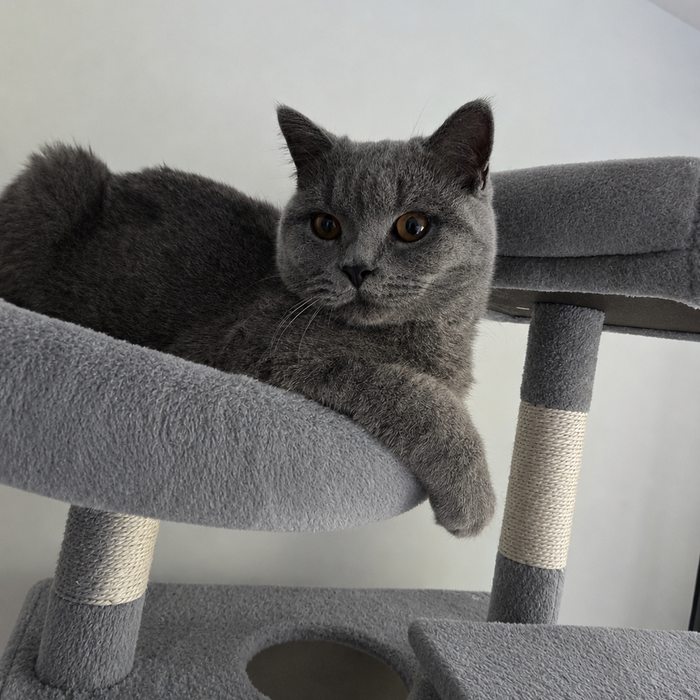
Direct answer: use a stable, easy-to-reach surface, keep sessions short and avoid forcing stiff joints into position. New difficulty grooming can reflect pain or illness, so veterinary advice comes before tougher handling.

Bring the tools to the cat
Choose a familiar low resting place with good light and non-slip footing. Do not require the cat to jump onto a high worktop or balance on a narrow perch.
Work in small sections
Begin where the cat is comfortable, pause often and stop at signs of tension. Never pull hard at mats or use scissors near the skin.
Track what has changed
Note greasy fur, dandruff, reduced self-grooming, overgrooming or sensitivity. A vet can assess the cause and advise whether professional clipping or another care plan is needed.
Where furniture helps: The Cashmere Comb may support this part of the routine. Check the live product page for current specifications and suitability; furniture does not replace veterinary or behaviour advice.