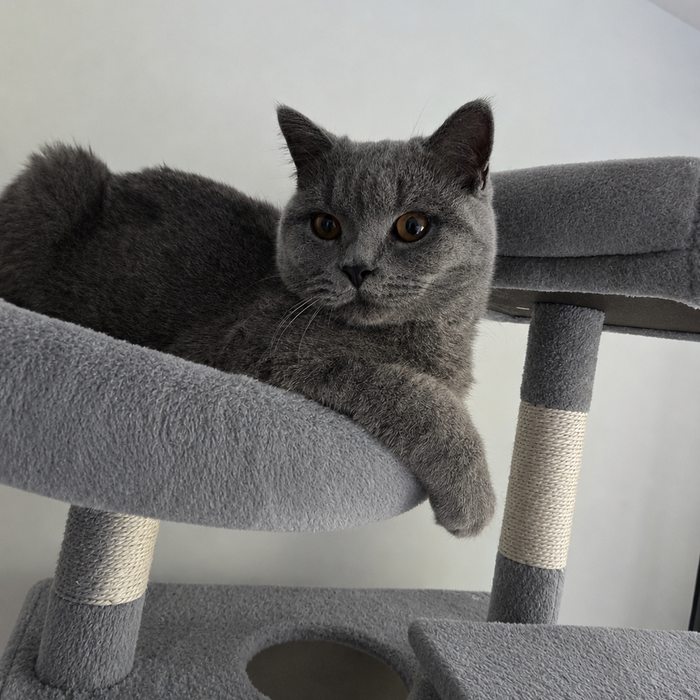
Offer older cats brief, low-impact games at floor or resting-platform level, and let the cat set the pace. Reduced play can reflect pain or illness, so a sudden change deserves veterinary attention.

Lower the target, not the interest
Cats Protection advises adapting the home for ageing cats. Move a wand toy slowly along the floor or beside a familiar bed instead of demanding high jumps. Pause often and allow watching to be part of the session.
Provide traction and easy exits
Use a non-slip surface and keep the route back to food, water, litter and resting places clear. Do not surround a cat with toys. If furniture is used, choose a low, stable surface rather than encouraging a leap onto a high perch.
Notice changes rather than pushing through
Stiffness, hesitation, missed jumps, irritability or stopping a formerly enjoyed game can warrant a vet check. Do not give human painkillers. Adjusting play is supportive, not a substitute for assessment.
Finish beside a comfortable rest
A spacious bed such as the Velvet Nest may provide a nearby resting option if its entry suits the individual cat. Never lift a reluctant cat into a bed or game.
Sources and further reading
Guidance checked 13 September 2026.