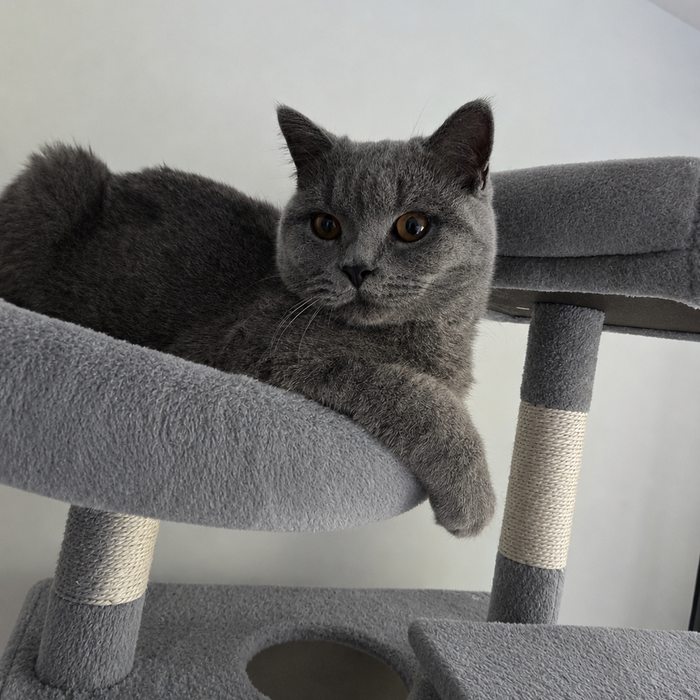
A plant that was difficult to reach may become accessible when a tower arrives beside it. Review the whole climbing route before arranging greenery around cat furniture. A plant appearing in a styled photograph is not evidence that it is suitable for a home with cats.

Identify each plant accurately
Check the actual species against reliable cat-safety guidance. Common names can be ambiguous, and appearance alone is not enough. Cats Protection advises keeping lilies out of homes and gardens with cats; do not rely on placing a dangerous plant on a higher shelf.
Follow the new route upwards
Look at what the cat could reach from every usable platform, including neighbouring shelves and hanging planters. Consider leaves, trailing stems, pots and vase water. Moving the tower can change access well beyond its own footprint.
Separate the woodland look from live planting
The Wall Collection uses a woodland visual setting in its reference. Ask which decorative details are part of the proposed piece and what they are made from. Any plants you add need their own suitability and placement check.
Act promptly after suspected exposure
If you think your cat has contacted or eaten a poisonous plant, contact a vet immediately and identify the plant if possible. Do not wait for symptoms or attempt a home remedy. The room arrangement should be reviewed after the immediate concern is addressed.
Choose a clear, suitable position for the ready-to-order furniture, or include existing plants in the room photographs for a bespoke enquiry.