Use both shared and separate play when living with multiple cats. If one cat blocks, chases or consistently reaches the toy first, give each cat an individual session behind a closed door as well.

Watch access rather than proximity
Two cats in the same room are not necessarily participating equally. Track who approaches, who hangs back, who controls doorways and whether either cat stops when the other arrives. Quiet watching can be interest, caution or simply a choice not to play.
Set up individual sessions
Cats Protection recommends interactive play suited to the cat. Use a familiar room with resources and a clear exit. Match toy speed and height to that cat, offer chances to catch it, then store stringed toys.
Keep shared play spacious
Use more than one toy and avoid sending both cats into the same narrow landing spot. Stop if play turns into staring, blocking, chasing without role changes, growling or hiding. Do not force cats to “work it out”.
Spread furniture and resting choices
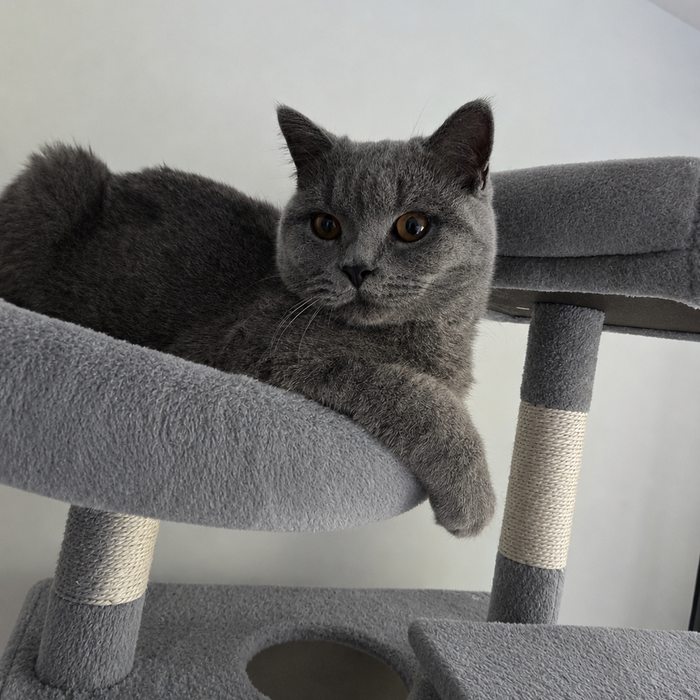
Multiple routes and resting points reduce competition. The Ultimate PawHouse is one large activity structure, but a multi-cat home still needs distributed resources rather than a single shared hub.
Sources and further reading
Guidance checked 13 September 2026.