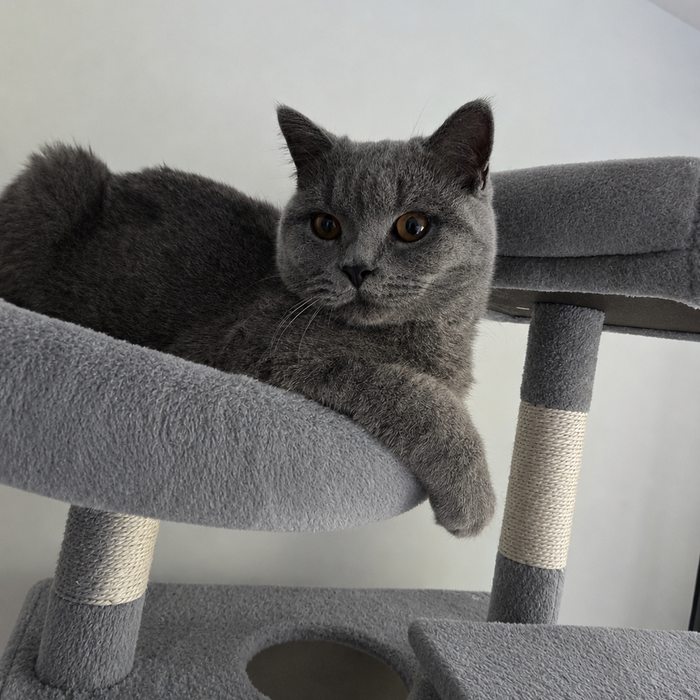
A Toyger can enjoy varied indoor play, food puzzles, scratching and reward-based training. Despite the striped appearance, a Toyger is a domestic cat, not a small wild cat, and needs ordinary feline welfare choices.

Start from domestic-cat behaviour
TICA describes the Toyger as an active, intelligent domestic breed and specifically notes that it has no tiger blood. Offer stalking, chasing, climbing and exploration in safe forms rather than using the appearance to justify extreme exercise or exotic feeding.
Alternate active and quiet tasks
Run brief wand-toy games with chances to catch the toy, then use a simple food puzzle or a cardboard exploration box. Stop while the cat remains comfortable. A cat who walks away, hides or becomes tense is giving useful feedback, not failing a training session.
Create more than one resource area
Spread scratchers, water, rests and observation points around the home so one tall structure is not the only destination. Keep furniture away from unsecured windows, hot surfaces and shelves that cannot support a landing.
Measure a large structure carefully
The Ultimate PawHouse is a tall activity structure for large breeds. Check its footprint, platform route, room clearance and anchoring instructions. A breed’s typical activity level does not confirm an individual product fit.
Sources and further reading
Guidance checked 13 September 2026.