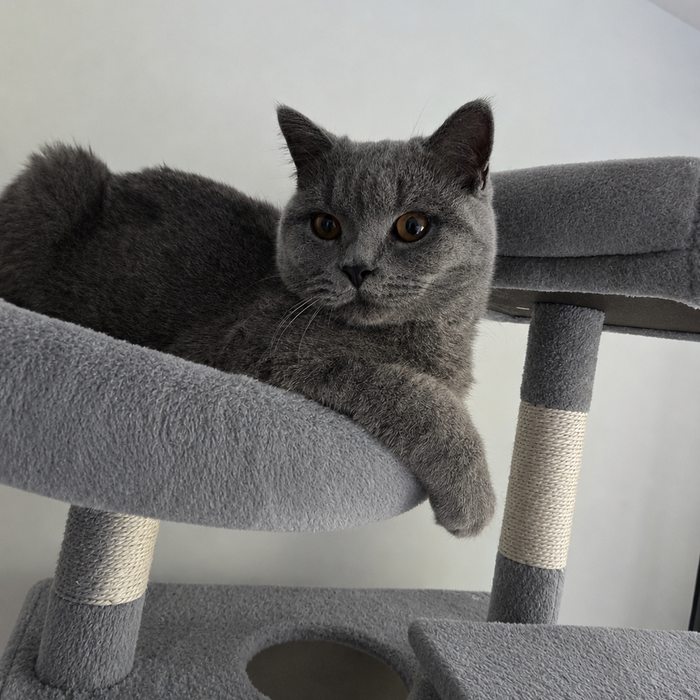
A large frame does not establish whether a cat is at a healthy weight. Assess body weight alongside body and muscle condition, with help from your veterinary team. A thick coat can make touch particularly useful, but appearance and weight trends still contribute.
Assess fat and muscle separately
Ask your vet to demonstrate assessment of the ribs, waist and fat covering using a recognised body-condition chart. Muscle condition needs a separate check: a cat can carry excess fat and still lose muscle. The WSAVA nutrition resources provide both tools.
Do not use a breed weight range or the presence of a loose abdominal pouch as proof of healthy condition. Record changes and ask what they mean for your individual cat.
Keep weight changes gradual and supervised
If weight loss is needed, agree an appropriate food, daily amount and review schedule with your vet. Include treats and food used for enrichment in the plan. Do not crash-diet a cat or assume unexplained weight loss is a success. Cornell’s obesity guidance explains why abrupt food restriction can be dangerous.
Contact your vet promptly if appetite falls. For a cat with heart disease or another medical condition, nutritional needs require individual assessment.
Match activity to the cat
Offer play your cat chooses to engage with and allow breaks. Adjust the pace, surface and toy movement to comfort and mobility. Furniture should meet the exact model’s size, installation and load guidance; a cat’s weight alone does not establish whether a platform fits.
For diagnosed heart disease, ask the treating vet what activity is appropriate. Do not force exertion to build fitness or use exercise as a treatment for HCM.
Stop activity and seek emergency veterinary help for breathing difficulty, collapse or sudden painful limb weakness. New fatigue or reduced activity also warrants advice.
General owner information. Diet and activity plans should reflect your cat’s health.