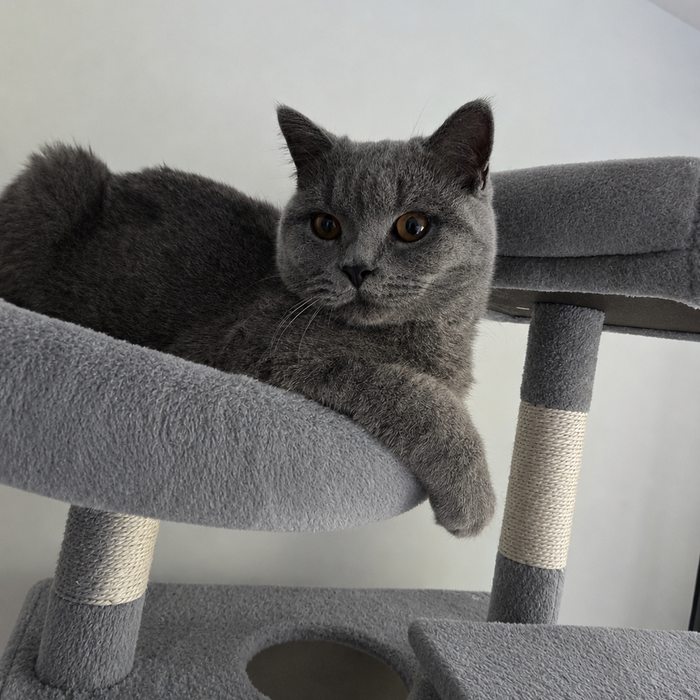
A gentle headbutt—often called bunting—is commonly a friendly social and scent-marking behaviour. The cat may rub the forehead or cheeks against you, then remain nearby or move on.

Respond without grabbing
Stay still and offer a relaxed hand at the cat’s level. If the cat continues to rub with a soft posture, you can give brief cheek or head contact that they usually enjoy. Pause frequently. A headbutt is not blanket consent for being picked up or stroked everywhere.
Look for the full pattern
Soft eyes, an upright tail and easy movement suggest a different emotional state from tense muscles, flattened ears or a cat pressing its head persistently against a wall. Repetitive head pressing is not ordinary bunting and needs urgent veterinary advice.
Furniture also carries familiar scent
Cats rub cheeks on people, doorways and furniture. Avoid removing every familiar scent at once during a deep clean or room rearrangement. Our guide to cheek rubbing on furniture explains that household version.
For broader signals, use Cats Protection’s behaviour guidance and our slow-blink guide.