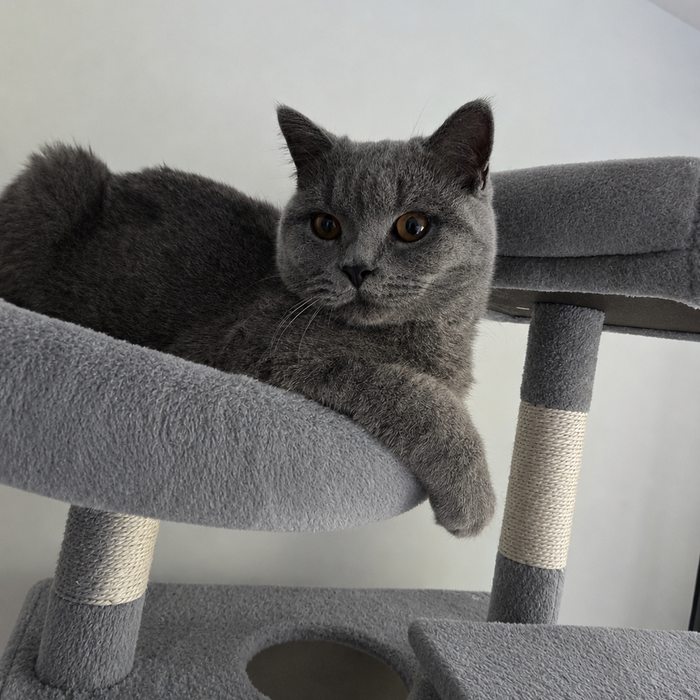
A meow does not have one fixed translation. Cats may vocalise for attention, access, food, greeting or because something feels different. Look at the situation and the rest of the cat’s body rather than answering the sound alone.

Check what happened immediately before
Is the cat beside an empty bowl, a closed door or a favourite play area? Has the usual routine changed? Respond to genuine needs, but avoid assuming that every meow means hunger. If food is due, serve the planned portion rather than adding uncounted extras.
Read the whole cat
Relaxed posture and a familiar greeting call are different from vocalising with hiding, agitation, altered toileting or difficulty moving. Our body-language guide explains why posture, ears, tail and escape choices belong together.
When to call the vet
Seek veterinary advice for sudden, persistent or unusual vocalisation, particularly with pain signs, disorientation, appetite changes or difficulty passing urine. Do not punish or shout: that does not identify the cause and may increase fear.
For wider behaviour context, see Cats Protection’s cat behaviour advice. A Koda Pod can provide a sheltered resting option if that format suits your cat.