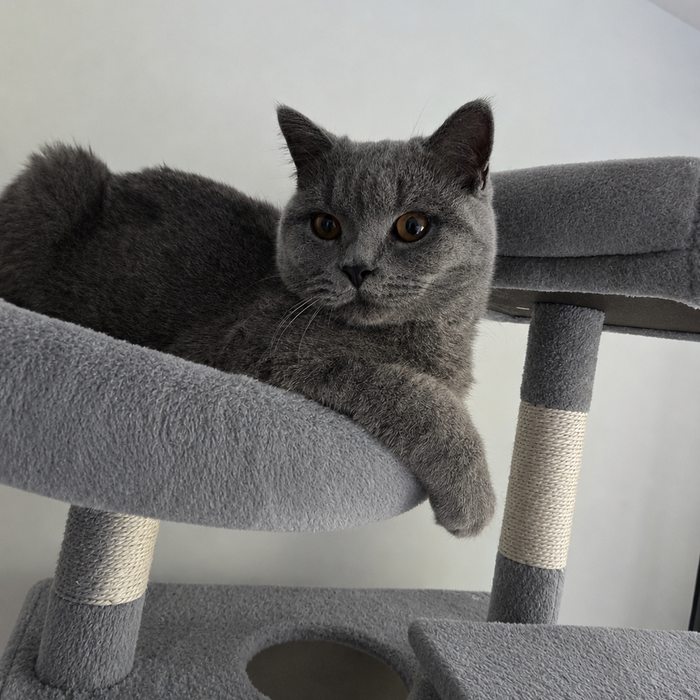
A stare can mean focused interest, expectation or tension; it is not a complete message by itself. Check the distance, posture and what usually happens at that time of day.

Is the cat waiting for a routine?
A relaxed cat near feeding or play time may be watching for familiar cues. Confirm the schedule rather than automatically serving extra food. If the cat looks towards a door or toy, they may be directing your attention.
Does the body look tense?
Stillness, flattened ears, a lashing tail or blocked escape route can turn mutual staring into social pressure. Look away, turn side-on and create distance. Between cats, add routes and separate resources instead of forcing them closer.
Try a low-pressure greeting
With a relaxed cat, a soft gaze and slow blink may be appropriate. Our slow-blink guide explains how to respond without treating it as a guaranteed request for touch.
Seek veterinary advice for a sudden fixed gaze with disorientation, altered pupils, poor balance or other neurological or vision changes. For general interpretation, see Cats Protection’s behaviour guidance.