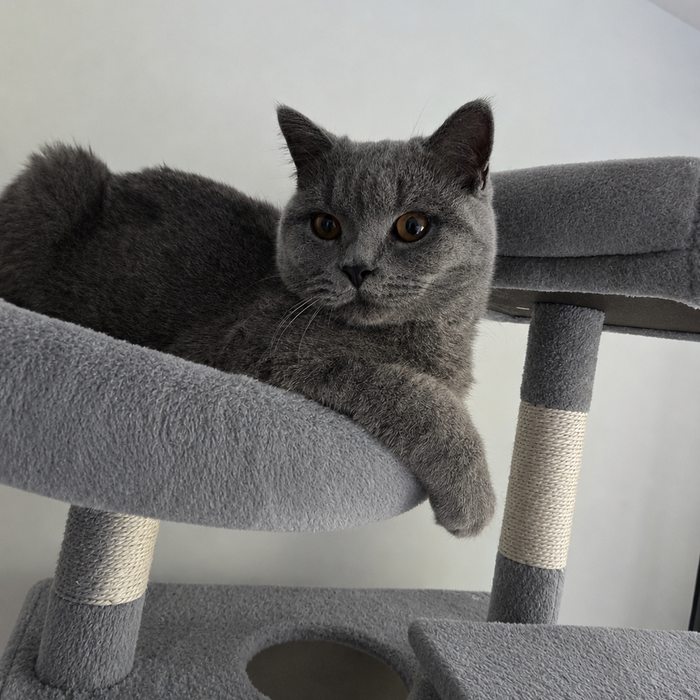
Cats that share a friendly relationship may groom one another, particularly around the head and neck. This social grooming is called allogrooming, but licking alone does not prove that two cats are relaxed friends.

Read what happens before and after
International Cat Care describes allogrooming as an affiliative behaviour among socially compatible cats. Look for loose bodies, voluntary approach and the ability of either cat to leave. Staring, pinning, tail lashing, growling or a chase afterwards changes the picture.
Do not force shared spaces
Provide separate beds, litter trays, food, water, scratchers and routes through the home. Cats should not have to groom or sleep together to reach a valued resource. A cat that declines contact needs distance, not a staged “bonding” session.
Distinguish social grooming from overgrooming
International Cat Care explains that overgrooming can have medical or behavioural causes. Hair thinning, broken hairs, bald patches, sore skin, repeated licking of one spot or a sudden change warrants veterinary advice. Fleas, pain and skin disease must not be guessed away as stress.
Spread comfortable resting options
The Velvet Nest is available in several current sizes, but one large bed is not a substitute for separate choices. Measure each cat, place beds in more than one location and let them decide whether to share.
Sources and further reading
Guidance checked 13 September 2026.