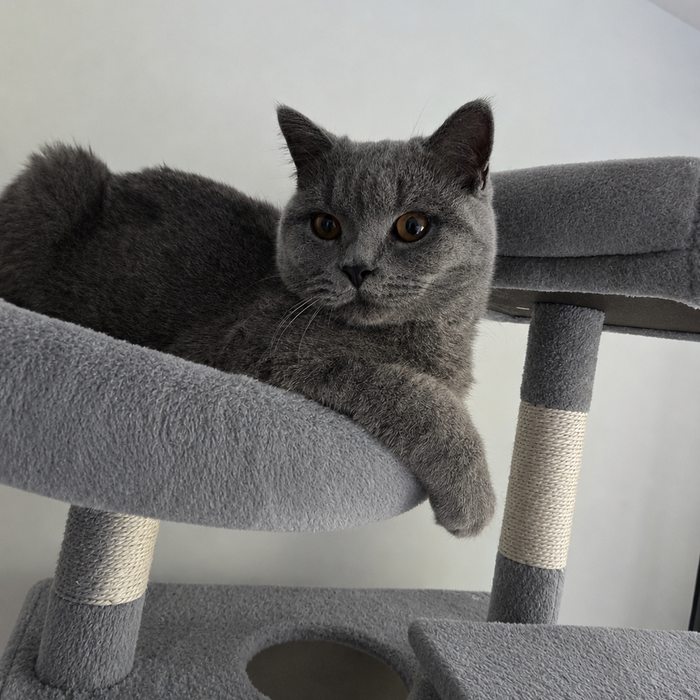
A relaxed cat may head-bunt or rub to exchange scent and communicate familiarity. The behaviour is commonly social, but context matters: posture, facial expression and the cat’s ability to move away tell you more than the contact alone.

Read the whole greeting
International Cat Care explains that rubbing can exchange scent. A softly held body, upright tail, slow approach and voluntary return suggest a comfortable greeting. A tense crouch, flattened ears, skin twitching or abrupt withdrawal means the interaction should stop.
Let the cat control contact
Offer a still hand at the cat’s level and allow the cat to approach. Many cats prefer cheek or chin contact to hands coming over the head, but individuals differ. Do not hold a cat in place to continue petting after it turns away.
Distinguish rubbing from a health change
A familiar head-bunt is different from persistent head pressing against walls, disorientation, circling, pain or a sudden major behaviour change. Those signs require prompt veterinary advice. Repeated facial rubbing with eye or ear discharge also warrants a check.
Keep a calm retreat available
Place a private rest such as the Koda Pod away from busy walkways so greeting is optional. A retreat should never become a place where the cat is reached into or pulled out for attention.
Sources and further reading
Guidance checked 13 September 2026.