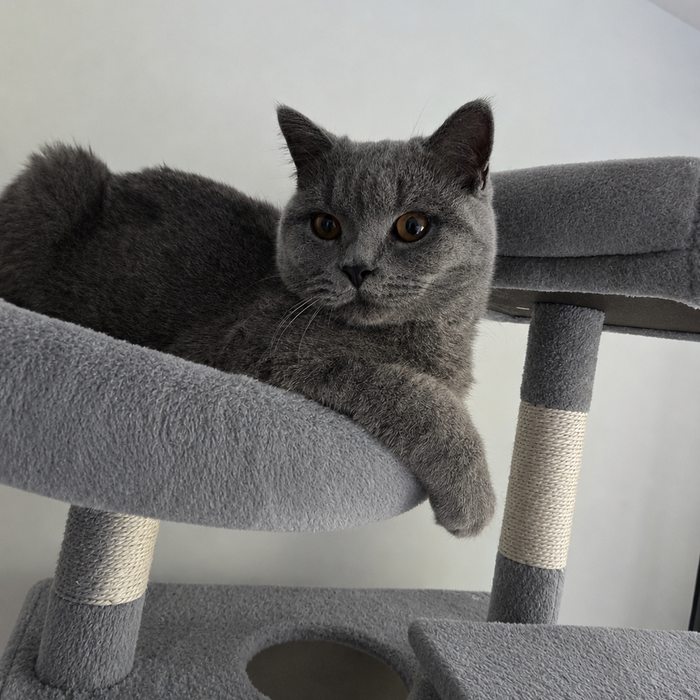
The small hindquarter wiggle before a pounce is usually part of focused play or hunting behaviour. The cat appears to adjust footing and prepare for the forward spring.

Give the pounce somewhere safe to land
Clear cables, hot drinks, unstable ornaments and slippery clutter from the route. Keep play away from stairs and open windows. On hard flooring, provide stable surfaces rather than placing a loose mat where it can slide.
Move prey away, not into the cat
With a wand toy, make short movements away from the cat and pause behind cover. Let them watch and decide whether to pounce. Do not tap the face or force repeated jumps.
Know when to stop
End while the cat is still coordinated and interested. Allow catches, then slow the game. Open-mouth breathing, distress or an altered gait is a reason to stop and seek appropriate advice.
Cats Protection describes play that encourages stalking, pouncing, chasing and batting. The Paw-villian offers a floor-level activity format; our watch-and-bat guide suggests a quieter alternative.