Ragdoll kittens are born white, with their point colours beginning to appear a few days after birth. The contrast between a lighter body and darker extremities develops as they grow. A pale kitten is therefore not a finished preview of its adult coat.
What are colour points?
Points are the darker areas associated with the face, ears, legs, paws and tail. The Governing Council of the Cat Fancy's Ragdoll profile describes kittens starting white, developing colour after birth and potentially becoming darker as adults.
This gradual development explains why photographs taken at different ages can look surprisingly different. It is not a reason to promise an exact final shade from one young-kitten picture.
Why is the colour stronger at the extremities?
The UC Davis Veterinary Genetics Laboratory explains colourpoint restriction through genetic changes associated with temperature-sensitive pigment production. Pigment production is reduced in warmer body regions, while cooler extremities develop darker pigmentation.
The laboratory identifies the TYR gene, which is involved in producing an enzyme needed for melanin formation. That provides a biological explanation for the pattern; it is not an instruction to change your kitten's environment to influence its appearance. Do not cool a kitten or alter normal care in an attempt to deepen its points.
Point colour and white markings are different things
Words such as seal or blue describe colour. Mitted and bicolour describe patterns involving white markings. The GCCF describes white front mittens and other white areas in mitted Ragdolls, while a bicolour has a white inverted V on the face alongside other white areas.
When discussing a kitten with a breeder, ask separately about its recorded colour and pattern. Saying that two cats are both “blue” does not mean their white markings will match. Nor does a similar-looking coat, by itself, establish a cat's pedigree.
Record changes without making the photographs misleading
If you would like a growth album, take occasional pictures in a similar spot with similar light. Add the date and your cat's age, and keep the original image rather than applying colour filters. Include a whole-body picture as well as the face so the developing contrast is easier to compare.
This is an observation record, not a colour test. Camera exposure, warm indoor lamps and editing can make the same coat look different within a single afternoon.
Choose furniture for the cat, not the colour prediction
A changing coat does not tell you the size of bed or perch your Ragdoll needs. For that decision, use our Ragdoll size guide and measure the individual cat.
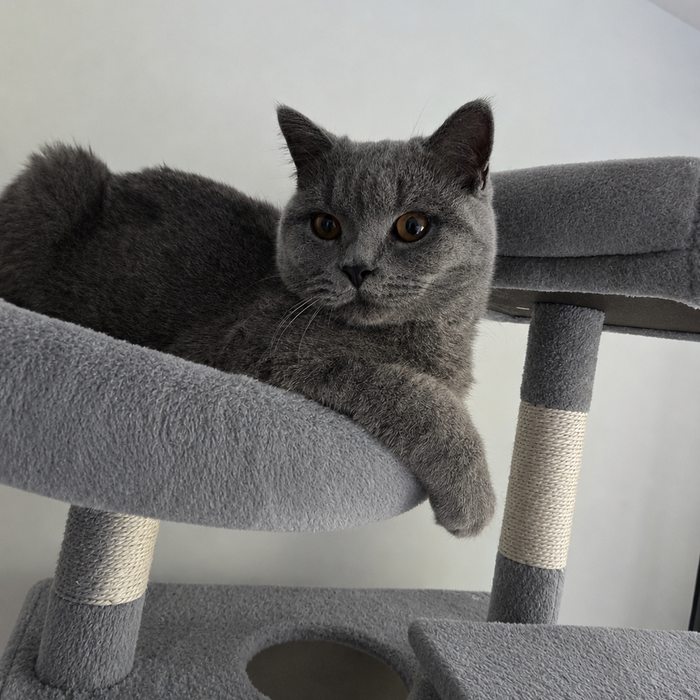
The featured image shows a Velvet Nest cat bed, not an example of a Ragdoll colour or pattern. When choosing a bed to suit your room, leave the coat prediction out of the fit calculation: usable resting space matters more than a colour match.
Breed and genetics sources checked 12 September 2026.