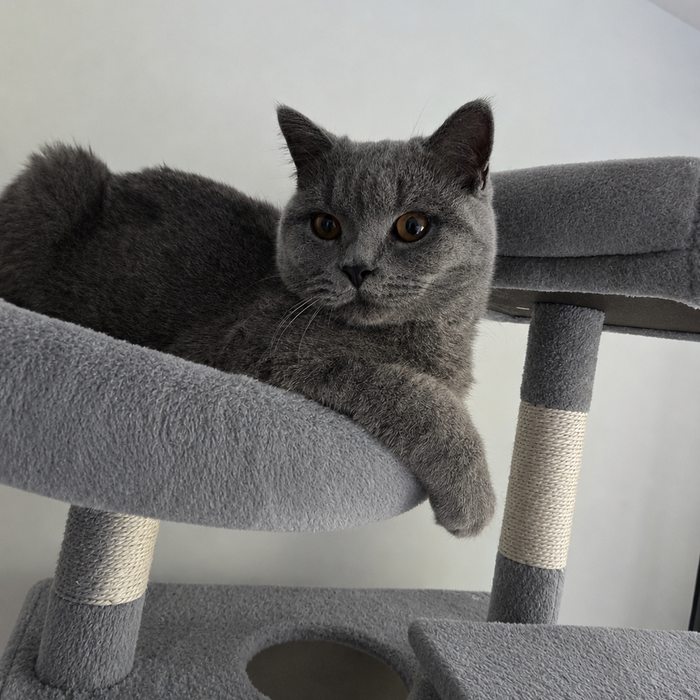
An adult cat may arrive with preferences that are already well established. Before buying a complete matching setup, ask the rescue or current carer what the cat actually uses. Those details can make the first week more familiar and help you avoid replacing useful equipment too quickly.

Ask for a practical daily profile
Request the current food and feeding routine, litter type, tray format, preferred sleeping places and favourite play style. Ask which details are directly observed and which remain unknown. A cat's behaviour in a rescue setting may not describe everything you will see once they settle at home.
Useful questions are specific: 'Do they use an open tray?', 'Where do they choose to sleep?' and 'What happens when grooming begins?' These produce more actionable information than asking whether the cat is simply easy or difficult.
Clarify health and care instructions
Obtain the relevant veterinary records and any current care plan through the adoption process. Ask about medication, mobility, grooming support and follow-up appointments where applicable. Do not adapt a prescribed routine to fit a new product. If equipment needs to accommodate an individual limitation, discuss that requirement with the veterinary team.
Prepare one appropriate first room
Follow the rescue's settling advice. Provide suitable food, water, litter, rest and hiding resources in distinct positions, with a calm route between them. Check doors, windows, cables and inaccessible gaps before arrival. A large cat needs actual usable space; a product's XL label alone is not a fit assessment.
Keep familiar choices available
Ask whether suitable familiar bedding or other items can accompany the cat. Do not wash away every familiar scent or remove a used-but-sound resource simply to make the room look new. Introduce changes gradually where practical, observing use rather than forcing the cat into a bed or onto a tower.
Plan the household response
Agree that the cat chooses when to approach people and can retreat without being followed. Tell all carers where essential resources are and what changes should prompt a call to the rescue or vet. Record eating and toileting observations in plain language if advised, without turning the first days into repeated tests of the cat's confidence.
Buy the next item from evidence
After settling begins, identify the actual gap: perhaps a larger resting area, another scratching position or a more suitable entrance. An existing ready-to-order piece may meet that need. Bespoke furniture becomes useful when a specific room or layout requirement needs discussion; it is not a prerequisite for welcoming an adult cat well.
Compare The Koda Pod only if a tent-style retreat matches the cat's known preferences and dimensions. Explore the ready-to-order range around the adoption advice, keeping a bespoke enquiry for a clearly defined requirement.