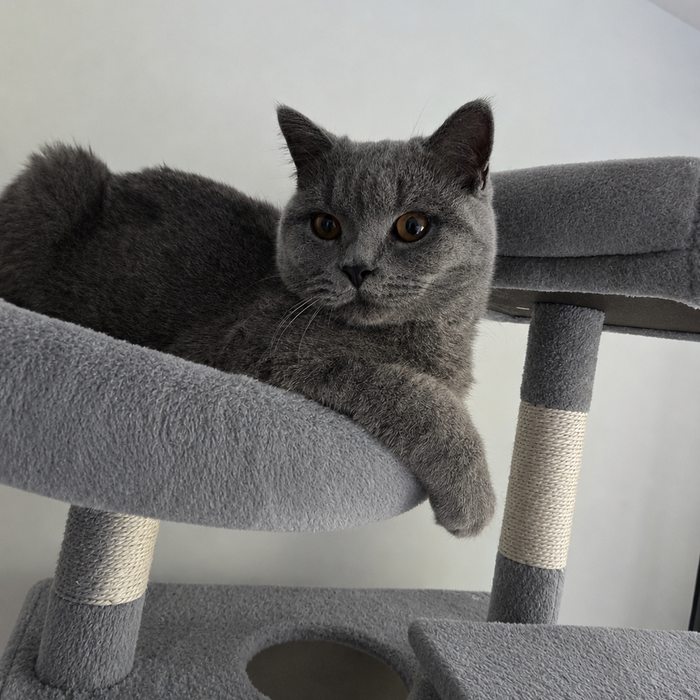
A paw or tail hanging over a bed edge does not automatically mean the bed is too small. Cats vary their resting positions. Combine observations with measurements and checks of the product’s condition.
Measure usable space
Observe your cat resting comfortably, without forcing a stretch. Compare the occupied space with the bed or perch’s clear length and width, excluding raised edges. For an enclosed product, check the doorway, internal floor and room to turn and leave.
Look at access and choice
Notice whether your cat can enter, settle and exit without difficulty. Avoidance can reflect location, texture, temperature, other pets or health, not just size. Cats Protection’s sleep guidance gives context for varied resting behaviour.
New hesitation, an unusual persistent posture or discomfort needs veterinary advice. Do not assume a larger bed will resolve pain.
Treat instability separately
Wobbling, tipping, damaged fixings or sagging components require inspection under the model’s instructions. They do not establish that the cat is too large, and an unsafe item should be taken out of use while the cause is addressed.
Check stated load limits and permitted use. Do not test an uncertain structure by encouraging your cat onto it.
Decide what needs to change
If measurements show insufficient space, compare the relevant internal dimensions of alternatives. If the issue is access, a lower entrance or easier route may matter more than overall size. If the product fits but is avoided, review placement and seek help for concerning behaviour changes.
Use our size guide when browsing cat trees or beds. Ask for missing dimensions rather than automatically sizing up.
Frequently asked question
Does a hanging tail prove that a cat’s bed is too small?
No. Tail or paw position alone does not establish poor fit. Check the usable sleeping area, comfortable movement and entry, and consider the cat’s normal preferences.