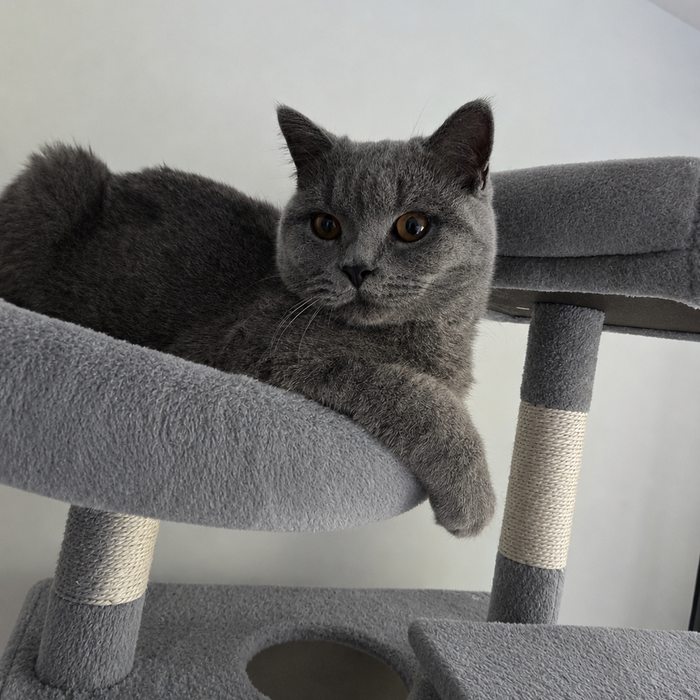
A balcony door can make a bright furniture position attractive, but it also changes how the room connects to an outside edge. Assess the opening before placing a climbing route beside it. An indoor tower is neither a balcony barrier nor evidence that outdoor access is secure.

Check the door in every normal position
Consider the opening when closed, partly open and being used by a person carrying something. Look at whether the furniture creates a new route towards the gap. A position that appears separate with the door shut may become accessible as soon as it slides or swings open.
Resolve balcony protection independently
The Cat Protection Society of NSW's balcony guidance treats enclosure and security as essential planning issues. Obtain suitable advice for the actual balcony and building. Do not assume a railing, insect screen or improvised mesh arrangement is designed to contain a climbing cat.
Do not use furniture as a barrier
A tower can move, be climbed or create an extra step. Keep access control independent of where the furniture stands. Avoid placing a bed where the opening door can push it, and retain a clear route for people to enter and leave without moving the cat's furniture each time.
Keep an indoor product indoors unless confirmed otherwise
A product such as the Modern Vine should be assessed using its current specification. Do not infer weather resistance from its name or appearance. A covered balcony can still expose materials to moisture and changing conditions, so confirm intended use before considering that location.
Explore the tower collection for a suitable indoor position. Include nearby doors and windows in any bespoke room brief.