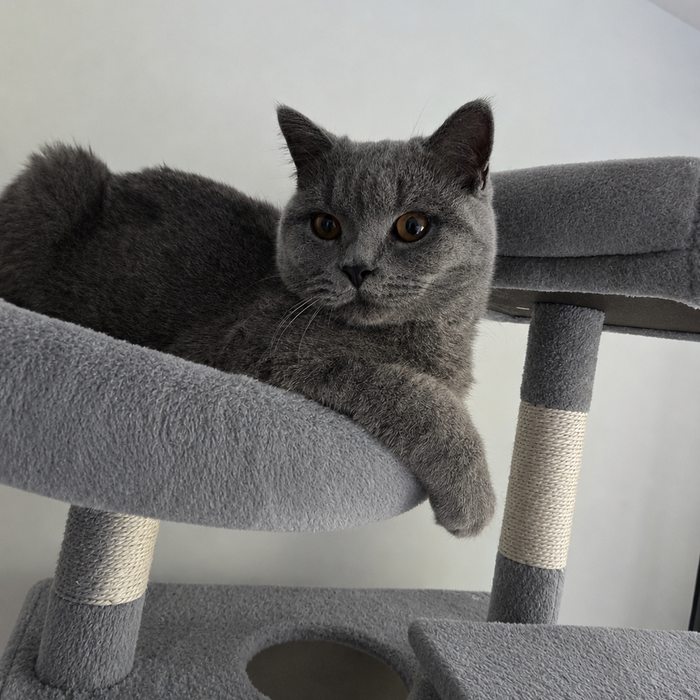
In a kitchen-diner, place cat furniture where it does not interfere with cooking, appliance access or carrying hot food. Start with the dining or sitting side of the room, then check the climbing routes the furniture would create. An empty patch beside a worktop is not necessarily a useful place for a cat tower.
Walk through a complete meal-preparation routine
Look at the route between the fridge, sink, worktop, cooker and table. Open the appliance doors and pull out dining chairs with pets elsewhere. Note where someone stands to load a dishwasher, remove an oven tray or serve a meal. Keep proposed cat furniture out of those spaces rather than measuring only the gap between closed cupboards.
On your sketch, distinguish three areas: cooking and appliance operation, carrying and walking routes, and possible cat-furniture positions. The last area is what remains after the other two are accounted for. It should not be created by narrowing an essential route.
Review what a new perch would make accessible
A tall tower near a kitchen island may provide an intermediate step towards the work surface. Moving it a little farther from the cooker does not resolve that route if a chair or shelf still connects the two. Consider the whole sequence of surfaces and choose a position away from food preparation and hot appliances.
A floor-level item can be easier to accommodate, but it still needs a defined space. Scratch Central is listed as 60cm high with a 35 × 35cm base, a scratching post and a ball track. Allow for the cat using the post and playing around the base, not just the wooden square.
Do not use the busiest gap as the cat's corner
The end of a dining table can look spare when chairs are pushed in. At mealtimes, it becomes a sitting and standing area. Check the furniture position with the usual number of people seated. A scratcher or bed should not need moving into a doorway whenever someone joins the table.
Keep toys and loose accessories away from walking routes and cooking equipment. Store play items when they are not in supervised use where their instructions require it. Cat furniture should remain separate from cleaning-product storage and food-preparation equipment.
Plan feeding separately from furniture styling
A coordinated bowl, bed and scratcher do not have to form one display. Choose feeding locations around your cat's access and the household routine rather than placing everything beside the matching kitchen cabinetry. Keep the cat's eating position clear of preparation supplies and the path used to carry meals.
If you are considering a feeding stand beneath a cupboard, also read the cupboard-door clearance check. For the wider kitchen-diner, the priority is a stable cat-furniture location that remains practical during cooking, serving and ordinary family use.