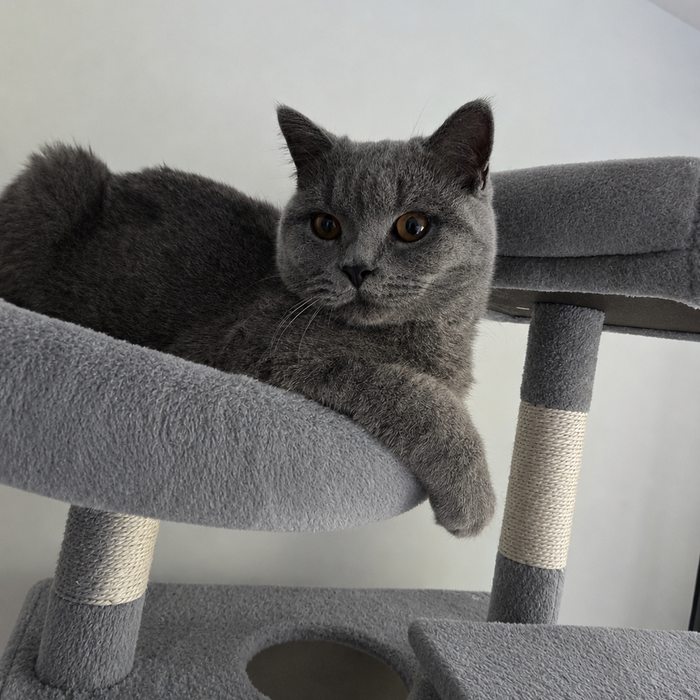
A rented home can still have a thoughtful place for scratching, resting and watching the room. The important distinction is between furniture that looks freestanding and furniture whose instructions actually permit the installation you can provide. Start with that check before choosing by height or appearance.

Read the installation instructions first
Some freestanding towers still require a wall restraint. If a fixing is specified, leaving it off does not make the tower a no-drill option. Ask for the instructions before ordering and check any relevant restrictions for your home. If the required installation cannot be provided, choose a different product rather than substituting an adhesive hook or another unapproved fixing.
Do not assume a tension tower solves everything
Floor-to-ceiling furniture needs compatible surfaces, the correct height range and the installation conditions specified for the model. It can also place pressure on ceiling finishes. Check those details and the arrangements for your property before proceeding. The Modern Vine has its own product specification; a general renter-friendly description elsewhere does not establish its suitability for your room.
Build the room from separate activities
You may not need one very tall piece to address every activity. A floor-level resting place, a suitable scratching post and a safe existing vantage point can be considered separately. The Koda Pod is a tent-style hideaway, while Scratch Central is a standalone scratching post. Check dimensions and instructions for each; neither is a replacement for the climbing opportunities your individual cat may need.
Protect the floor without changing stability
Check the furniture's feet and the floor-care guidance. Do not add a thick cushion, loose rug or improvised pad beneath a base if it changes how the item sits. Ask whether a particular protective layer is compatible with the furniture. Keep the approach clear, and inspect for movement during use rather than assuming that a large base cannot shift.
Think about the next move
Keep the assembly instructions and label spare parts. Before buying a large piece, ask whether it is designed to be dismantled and reassembled, and check the packed dimensions. For bespoke furniture, describe portability as a requirement at the enquiry stage. A design made for one particular alcove may need more thought if you expect to move.
Explore the Giant Paws collection with your installation limits in hand. Ask us about any unclear requirement before deciding on a piece.