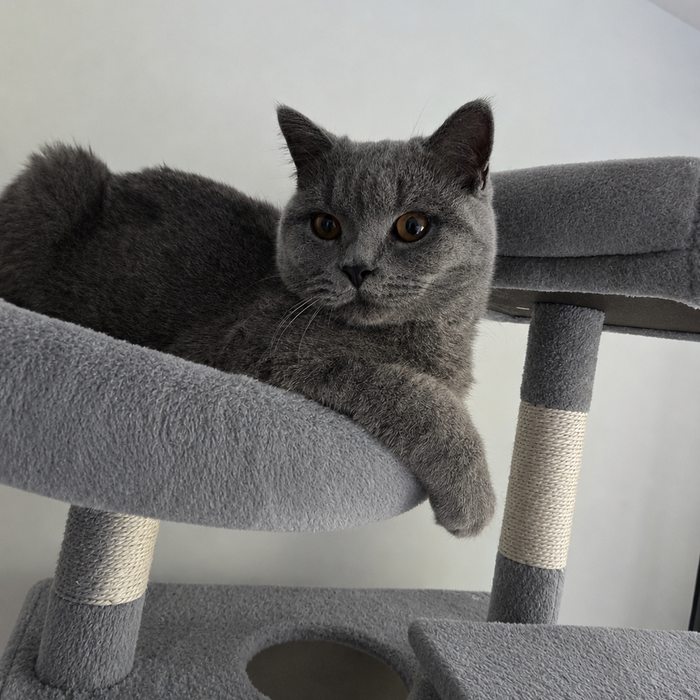
Wall shelves and cat towers can both provide elevated resting options. Choose by usable dimensions, routes and installation requirements rather than assuming that one is always better for large cats.
Wall-mounted shelves
Shelves can create a route along a wall while reducing the amount of floor occupied by furniture. Check the entire installed system: shelf, bracket, fixings, wall construction and the maker’s permitted mounting arrangement. A fixing’s advertised rating alone does not establish the capacity of the assembled shelf.
Catastrophic Creations’ installation guidance illustrates that mounting depends on wall type and product requirements, including stud and masonry arrangements. Follow the instructions for your exact shelf; do not treat “studs only” or a generic wall anchor as a universal rule.
Cat towers
Towers can combine platforms, scratching areas and hideaways in one structure. They occupy floor space and may still require wall or ceiling anchoring. Check the actual instructions rather than assuming a freestanding appearance means the wall is irrelevant.
Plan the route in both directions
- Compare usable perch areas with your cat’s preferred resting positions.
- Check gaps between surfaces and the route down.
- Look for places where one cat could block another.
- Provide alternative resting places away from a shared climbing route.
One type or a combination?
You do not have to buy both. Start with the layout your home can accommodate and your cat can use. Check the mounting requirements and ask a competent installer if the supporting surface is uncertain. Browse the Giant Paws tower collection and use our size guide for measurement checks.