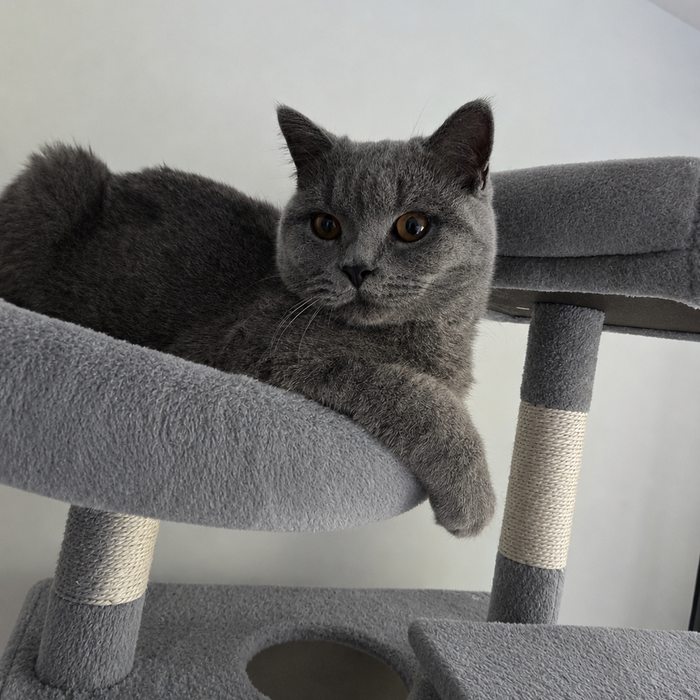
Cat furniture should work for the people using the room as well as the cat. If someone uses a wheelchair or walking aid, begin with their actual routes and care tasks. A generic gap measurement cannot establish that a particular home arrangement is accessible.

Mark the space used in real life
Include turning, approaching seating and any transfer areas the person needs. Check doors and drawers in use, not only the clear floor when everything is shut. Do this with the person concerned and appropriate professional input where needed.
Review reach and handling
Consider how bowls, litter components and bed covers will be removed, carried and cleaned. A piece that fits along a wall may still make a daily task awkward. Do not solve human reach by placing a cat resource at an unsuitable height without assessing the cat's access too.
Keep projections visible
Record upper platforms and overhanging parts as well as the base. Avoid creating unexpected obstacles along a route. Keep loose toys and supplies stored appropriately rather than allowing them to accumulate beside the furniture.
Make a bespoke enquiry concrete
Explain the specific access task and measurements instead of asking for a broadly 'accessible' design. A reference such as the Castle Collection can start a visual conversation, but the final dimensions and feasibility need agreement. Do not assume a bespoke label certifies accessibility.
Compare the ready-to-order range against the real household requirements, or bring a measured brief to the bespoke collection.