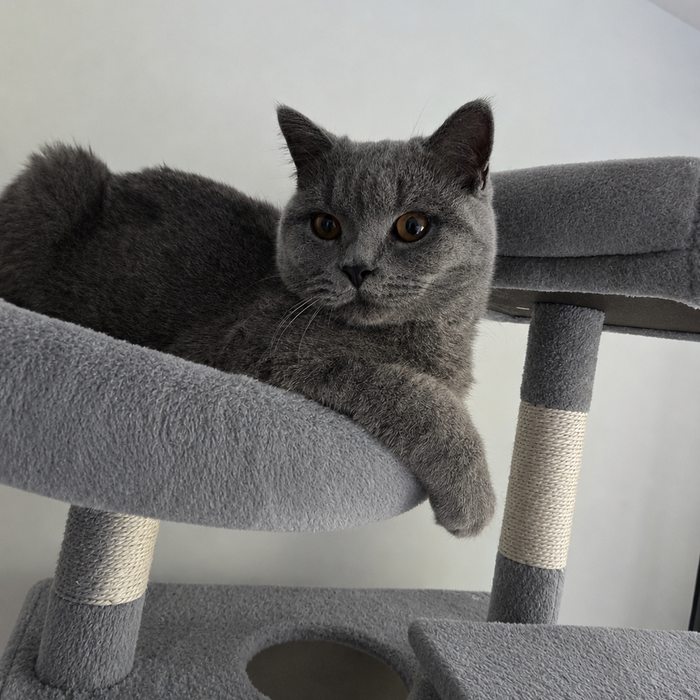
Small curved claw-like pieces around a scratching post can be shed outer husks. Cats Protection includes discarded claw husks among the traces left during scratching. Finding one is different from seeing a painful or bleeding claw on the cat.

Look at the cat as well as the floor
Notice whether your cat walks, stretches and uses the post normally. Do not assume every claw-shaped fragment is harmless if there is bleeding, limping or obvious discomfort. Contact your vet if you suspect an injury or are unsure what you have found.
Keep the area easy to inspect
Remove loose debris during routine cleaning and check the post's covering and base at the same time. This helps you distinguish material shed by the cat from fraying rope or damaged furniture. Follow the product's care instructions rather than pulling at attached fibres.
Do not pull material from the claw
If something appears caught or attached to a claw, avoid tugging or trying to remove it by force. Ask your veterinary team for advice. A photograph of the loose fragment and the circumstances can help explain the concern.
Keep scratching available
Normal claw maintenance is one reason cats need suitable scratching opportunities. Do not remove a sound post simply because you find husks nearby. Assess the usable surface, position and condition as part of the ordinary equipment routine.
Explore Scratch Central if you need a separate post, and compare its stated height and base dimensions with the space and your cat's actual stretch.