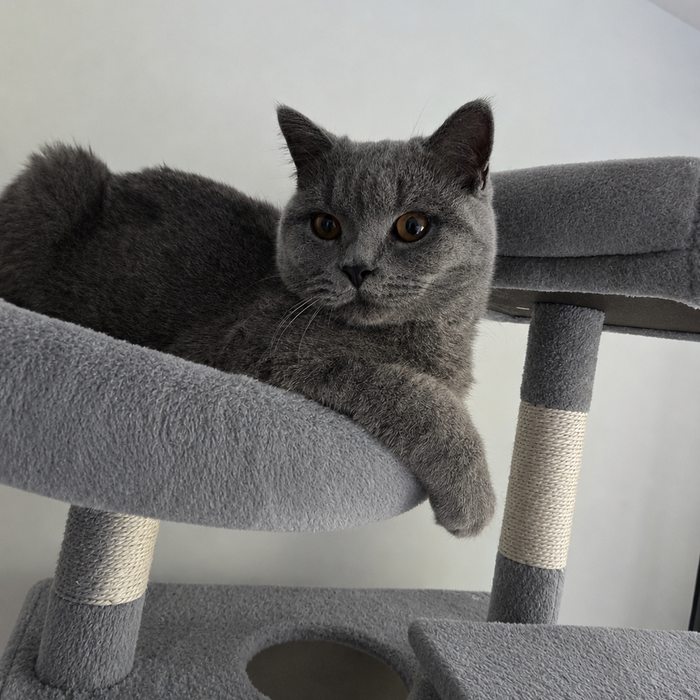
Sisal and carpet are both used on scratching furniture. The useful question is which surface your cat will use, on a product that fits its scratching posture and remains secure when correctly installed. We do not have comparative wear testing that establishes a universal winner for large cats.
Sisal versus carpet: what to compare
| Check | Sisal-covered products | Carpet-covered products |
|---|---|---|
| Surface | Check whether the listing specifies rope or woven sisal, and inspect the actual finish. | Check the pile and weave rather than treating all carpet as the same surface. |
| Condition | Look for loose wrapping, detached ends and exposed fixings. | Look for loose threads, detached covering and exposed fixings. |
| Replacement | Ask whether the scratching section can be replaced and what parts are compatible. | Ask whether the covering or section is replaceable under the manufacturer’s instructions. |
| Cost | Compare the actual price, replacement parts and expected maintenance. The material name alone does not establish lifetime cost. | |
Start with your cat’s preferences
Purina’s scratching-post guidance emphasises individual material preferences. Observe what your cat already scratches and offer an appropriate surface and orientation. Do not assume that a carpet-preferring cat will automatically switch to sisal.
Height and stability matter too
Cats Protection recommends a sturdy scratching surface and sufficient height for a full stretch. For an upright post, check the uninterrupted scratching length, not just the product’s total height. A horizontal scratcher serves a different posture. Follow installation instructions and inspect the product for movement and damage.
Which lasts longer?
That depends on the specific covering, construction and use. We cannot support a claim that sisal always lasts longer than carpet above a particular cat weight, or that one material never snags claws. Check the maker’s care guidance and replace or repair damaged parts as instructed.
Explore Giant Paws options
Scratch Central offers an upright sisal post with play features. The Paw-villian offers a figure-eight scratch and play board. Compare the dimensions and surface details with how your cat likes to scratch. Current options and prices are on the product pages.
Sources: Cats Protection: scratching and Purina: choosing a scratching post.
FAQs
Does sisal always outlast carpet for large cats?
We do not have comparative testing that supports that claim. Durability depends on the specific covering, construction and use, so compare the actual product and maintenance requirements.
What should I check besides the scratching material?
Check usable scratching length, orientation, installation requirements, condition and whether your cat likes the surface. Follow the manufacturer’s care and replacement instructions.