Lilies should not be brought into a home where a cat can encounter them. The petals, leaves, pollen and even vase water can be dangerous. If exposure may have happened, contact a vet immediately rather than waiting for symptoms or trying a home remedy.
The whole flower arrangement needs checking
Cats Protection warns that lilies can cause serious poisoning in cats and advises immediate veterinary contact after suspected exposure. A cat does not need to sit down and eat a whole flower: pollen can transfer to fur and be swallowed during grooming, while vase water is another route.
Read the plant list on bouquets and subscription flowers before they enter the room. “Pet-friendly” styling, a tall vase or a high shelf is not enough if the exact flowers are unknown.
High shelves are not reliable barriers
Cats can climb furniture, jump to worktops and investigate fallen petals. Our guide to plants beside cat furniture explains how a new tower can create a route to a previously unreachable display.
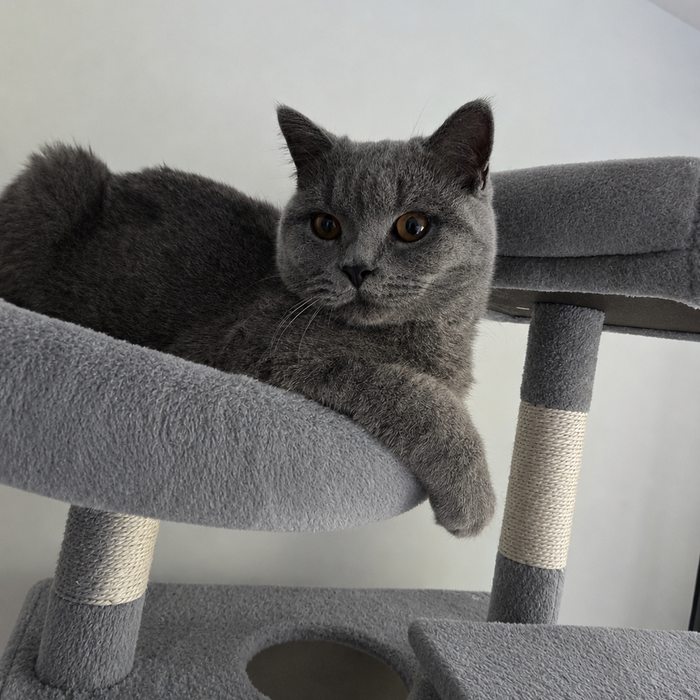
The pictured Cream Estate has multiple levels. Its presence in the image does not make nearby flowers cat-safe; map the full climbing route around any tall furniture.
Make a household rule visitors can follow
- Do not accept lilies for display inside the cat’s home.
- Check mixed bouquets before unwrapping them in a cat-accessible area.
- Keep discarded flowers, leaves, pollen-covered wrapping and vase water inaccessible.
- Tell regular visitors and gift-givers about the no-lily rule.
- Save the regular and emergency vet numbers where everyone can find them.
If exposure might have happened
Move the cat away from further contact without delaying the call. Tell the vet what plant was present, which parts may have been involved and when it happened. Take the label or a photograph if it is safe to do so. Do not make the cat vomit or give food, medicine or liquid unless a veterinary professional instructs you.
Possible exposure is the threshold for the call; the absence of visible illness is not a reason to wait. Emergency assessment is time-sensitive.
Safety guidance checked 12 September 2026. This article does not replace emergency veterinary advice.