The Maine Coon developed in New England, in the north-east of the United States. It is a domestic cat breed with a working-cat history, not a cat–raccoon cross. Its story includes rural cat competitions, a celebrated nineteenth-century show winner and a much later arrival in British pedigree breeding.
Where the records begin
The Governing Council of the Cat Fancy's breed history describes Maine Coons appearing at New England agricultural competitions in the 1860s. Their sturdy appearance and substantial coat reflected their background as rural working cats.
That is different from identifying one founding litter. A regional population can develop before people establish a formal breed standard, registry or championship class. When reading a breed history, keep those events separate: the cats' existence, their appearance at shows and their official recognition need not share a date.
Why the raccoon story is a myth
The Cat Fanciers' Association explains that the bushy, ringed tail prompted a story about raccoon ancestry, but that pairing is genetically impossible. It also describes stories involving Marie Antoinette's cats and a sea captain named Coon as legends rather than established pedigrees.
A resemblance is not an ancestry record. A long tail, ear tufts or a rugged coat may make a story memorable, but a photograph cannot establish how a breed began. It is perfectly possible to enjoy the folklore while labelling it honestly.
Four milestones worth knowing
- 1860s: Maine Coons were shown at agricultural events in New England, according to GCCF.
- 1895: the brown tabby Cosey won Best Cat at the Madison Square Garden show in New York.
- 1976: CFA granted the breed championship status after renewed work by enthusiasts.
- 1984–1993: GCCF records imports into Britain in 1984, the formation of the Maine Coon Cat Club in 1985 and GCCF championship status in 1993.
The dates describe recognition and organised breeding, not a claim that every present-day cat has an individually documented connection to Cosey.
What history does not tell you about your own cat
Working-cat origins are not instructions to feed a homemade hunting-style menu or leave a cat outside in harsh weather. Use present-day care guidance and the individual cat's needs. Our Maine Coon food guide covers choosing a complete everyday diet.
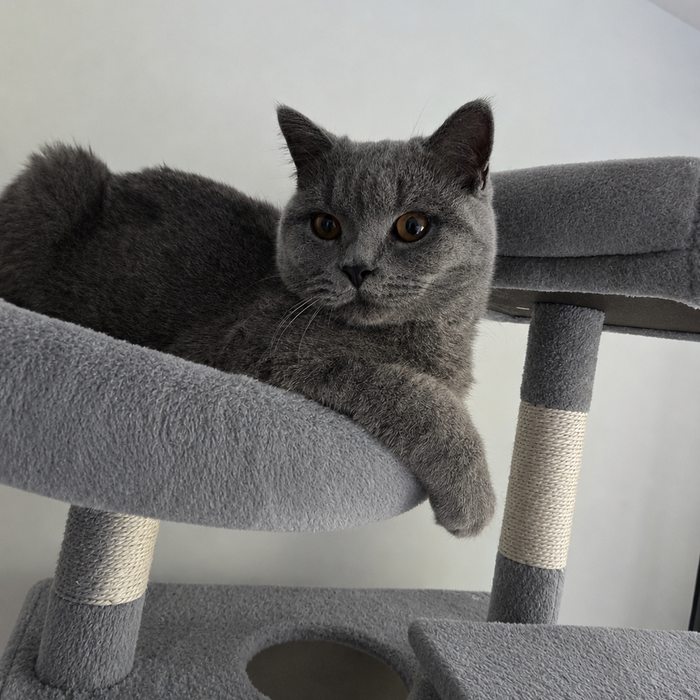
The same applies to furniture. A modern tower such as The Cream Estate, pictured with this article, is a contemporary resting and climbing option, not a historical reconstruction. Choose it using your cat's measurements and the product's instructions, rather than the breed's impressive reputation.
Breed-history sources checked 12 September 2026.