If your cat is missing, start a careful search of your home and immediate surroundings, alert the microchip database and contact local vets and rescue organisations. Run these tasks alongside one another where you have help. A clear record makes it easier to follow up sightings than a growing collection of scattered messages.
Search places where a cat could be shut in
Cats Protection's missing-cat advice starts with checking the home and garden thoroughly. Look in cupboards, sheds, garages and other enclosed spaces. Check inside household appliances before anyone switches them on. Ask neighbours to physically check their outbuildings, rather than only asking whether they have seen a cat passing.
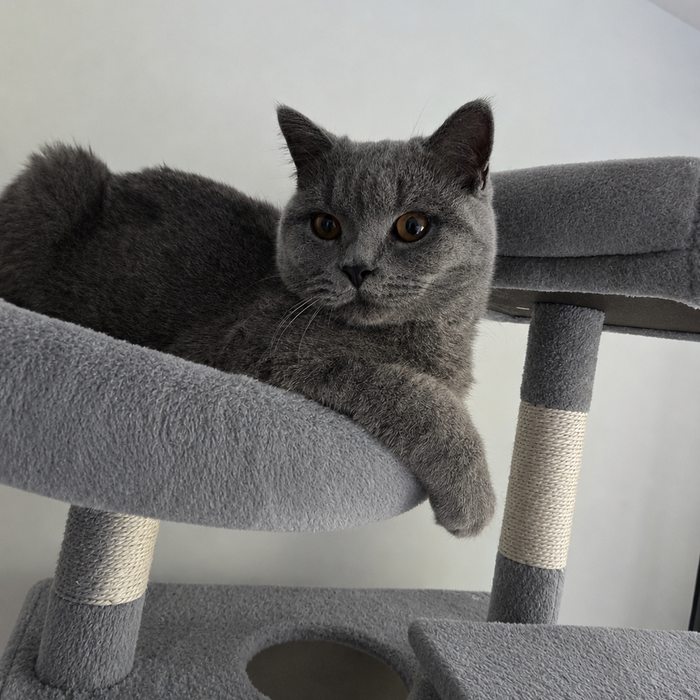
Check familiar furniture hideaways too. The pictured Koda Pod illustrates an ordinary indoor resting place, not search equipment. Do not assume an apparently empty room has been checked if enclosed beds and the spaces behind furniture have not been inspected.
Create one search record
Choose a notebook or shared note and put these headings at the top:
- Last confirmed sighting: time, exact place and who saw the cat
- Places checked: location, time and person who checked
- New reports: what was seen, where, when and any photograph
- Contacts notified: organisation, contact method and reference
- Next action: who will follow up and what needs confirming
Mark an uncertain sighting as uncertain. For example, “Neighbour saw a dark long-haired cat beside the garage at 7pm; no photograph” is more useful than writing “found near garage”. Keep one current version so helpers are not working from different information.
Alert the people who may find your cat
Blue Cross recommends notifying the microchip database promptly, contacting local veterinary practices and rescue centres, and using lost-pet notices. Check that the database has a telephone number you can answer.
Prepare a clear recent photograph, a description, the last-seen area and a contact number for your notice. Share it through appropriate local lost-pet groups and ask permission before putting posters on someone else's property. Give organisations the same information so reports can be matched.
Check claims before paying or travelling
Blue Cross warns about scammers claiming to have found a missing pet and asking for fees. If someone says a veterinary practice has your cat, find the practice's contact details independently and call it directly. Do not rely only on a payment link or telephone number sent by the claimant.
Keep your public notice separate from private ownership records. Save microchip paperwork and identifying photographs for the appropriate checks; do not post account passwords or your full home address.
Keep the search information current
Update your record when a lead is checked. Once your cat is safely home, notify the organisations and groups you contacted and remove notices where possible. If you find an unfamiliar cat while searching, our found-cat guide explains the different steps for checking its owner. For future moves, see updating microchip details.
Sources checked 13 September 2026.