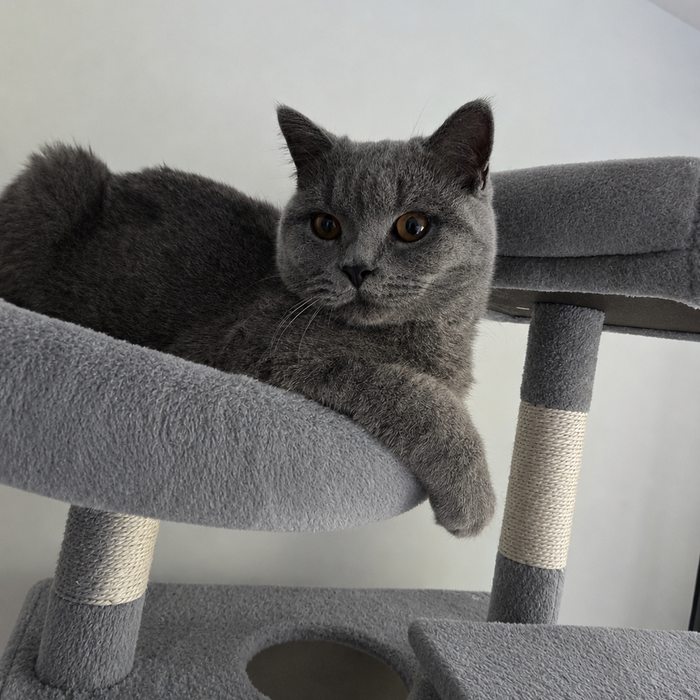
A period of heavier shedding can mean more coat care and household cleaning. Its timing and duration vary, so use your cat’s coat and comfort as the guide rather than assuming a fixed spring or autumn calendar.
Check the cat before the furniture
Look for new tangles, sore skin, bald patches or changes in grooming. Increased hair around the home is not proof that every change is a harmless moult. Our shedding guide explains when veterinary advice is appropriate.
Keep grooming comfortable
Offer regular gentle sessions, using suitable tools and stopping if they catch or your cat becomes uncomfortable. Long-haired coats commonly need daily attention, but a five-minute target should never override tolerance. See the brushing routine for handling and mat checks.
Make cleaning manageable
Choose a few frequently used resting spots to check regularly. Remove loose hair with a tool compatible with each surface. Our reusable roller is intended for suitable dry fabrics after a hidden-area test; it is not suitable for every material or for use on the cat.
Wash covers according to their labels, adjusting frequency to soiling. Avoid vigorous shaking indoors. Store cleaning tools securely and follow appliance maintenance instructions.
Do not dismiss repeated retching
Cats can bring up hairballs, but repeated vomiting or retching, reduced appetite, lethargy or difficulty passing stool needs veterinary advice. Do not assume these signs are caused by swallowed fur or wait for a numerical frequency threshold. Breathing difficulty requires emergency help.
Cats Protection’s vomiting guidance explains reasons to seek care. Ask your vet before using hairball remedies, supplements or changing diet to address symptoms.
Regular care can help with loose hair, but it cannot guarantee a hairball-free cat or a particular end date for shedding.