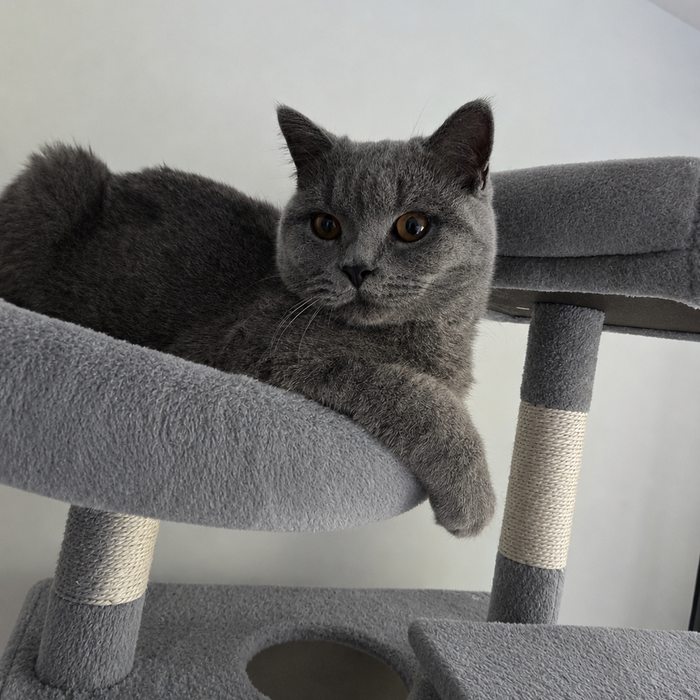
Furniture for a mixed-size household needs to work for each cat’s body, movement and preferences. A large resting platform may accommodate several sizes, but body size alone does not tell you who can reach it, who will use it or whether cats are comfortable sharing the surrounding space.
Make a separate fit checklist for each cat
Note each cat’s current weight, preferred resting position and access needs. Compare these with usable platform dimensions, entrance openings, internal bed space and the route between levels. A smaller cat is not necessarily less agile, and a larger cat is not necessarily more confident. Age, health and individual experience also matter.
For shared furniture, check the manufacturer’s limits for the whole structure and individual components, including any rules for simultaneous use. Do not assume that several platforms mean the tower is approved for several cats at once.
Check the approach and way down
- Look at the first step as well as the highest bed.
- Check gaps, footholds and whether another cat could block a narrow route.
- Provide reachable lower resting choices where needed.
- Use only steps, ramps or modifications compatible with the furniture’s instructions and safe installation.
A route that works for one cat may not work for another. Observe voluntary use instead of placing a hesitant cat on a high platform to test the fit.
Spread resources beyond one structure
The 2024 AAFP intercat tension guidelines address the needs of individual cats in shared homes. Their framework emphasises access to resources and safe places. The accompanying guidelines brief recommends distributing key resources and using visual separation.
Several beds on one tower do not necessarily provide the same choices as separate resting places elsewhere. Plan food, water, litter, scratching and resting locations so one cat does not have to pass another to reach every option.
Watch access, not just visible arguments
Notice waiting at doorways, staring, blocking or one cat avoiding a previously used place. Do not assume that the larger cat is responsible or that buying another tower will solve the problem. Discuss persistent tension or new behavioural changes with your vet, who can help assess health and advise on behaviour support.
Choose pieces that fill the gaps
Use the Giant Paws size guide alongside your individual checklists, then compare cat towers and trees. Ask for missing measurements or load information before ordering. One shared tower may form part of the layout, but it does not have to meet every cat’s needs on its own.