A robot vacuum adds another moving object to a room the cat already uses. Plan its route around beds, bowls and the litter tray rather than assuming obstacle detection will handle every detail. Check the first runs yourself and keep an alternative quiet area available.

Map loose edges and cables
Look at mat corners, toy strings and power leads around the furniture. Keep them arranged according to the relevant product instructions. iRobot's support guidance discusses obstacle detection on applicable models, but those capabilities should not be assumed for every appliance or every object.
Keep essential access clear
Do not position a dock so the robot waits or moves through the only route to a litter tray. For a powered tray such as the Bothy, consider its cable and maintenance access separately from the vacuum's route. Confirm the full operating space in the tray's instructions.
Use the appliance's permitted controls
If the vacuum offers exclusion areas or scheduling, follow the model guidance and verify the result. Do not assume a floor mat creates a reliable boundary. Check for spills or pet mess before a run instead of relying on an unverified detection claim.
Observe the cat and the furniture
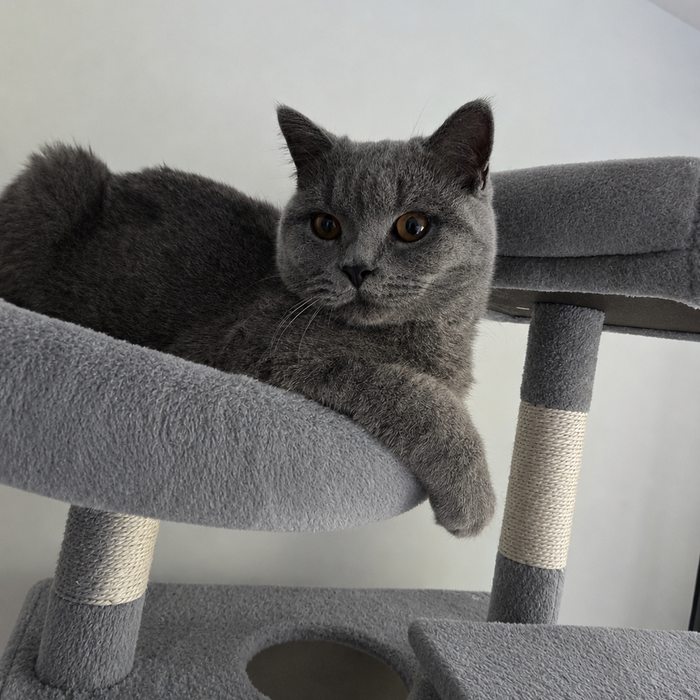
Notice whether the cat avoids resources while the machine operates, and whether it moves a bed or catches an edge. Adjust the routine around those observations. Never raise or modify a tower base simply to make the vacuum fit beneath it. The furniture's intended installation remains the starting point.
Include cleaning-machine access when comparing the Giant Paws range. For a bespoke design, describe the cleaning access you want to discuss without assuming every clearance can be provided.