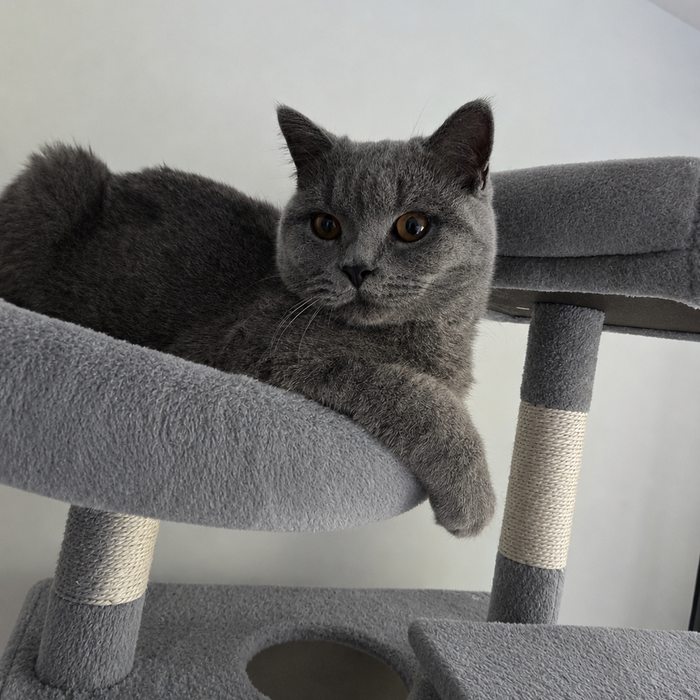
Use a suitable toy, not your fingers or toes, as the target during cat play. A kitten's gentle grab can become an uncomfortable habit as they grow. The aim is not to stop stalking and pouncing, but to give those behaviours an appropriate target away from your skin.
Make the household rule clear
Cats Protection advises against finger-and-toe games, including with kittens. It recommends toys that keep play away from the body and opportunities for a cat to catch the toy.
Agree a rule everyone can describe: no wiggling fingers under a blanket, no hands darting around a sofa arm and no encouraging a cat to ambush bare feet. Visitors need the same explanation. “Only when wearing a glove” is not a clear distinction for an animal learning which moving objects are part of a game.
Prepare the replacement before play begins
Keep a supervised toy somewhere an adult can retrieve it easily. A wand gives distance between hands and the moving target; a suitable kicker toy offers something larger to grasp. Check the toy for loose components and choose a clear floor area rather than steering a chase over furniture or towards stairs.
Let the toy pause as well as move. Give your cat chances to catch it, then allow a break. A game need not become faster and higher each time it is repeated. Watching from behind a chair can be part of the activity too.
If the game turns towards your hands
Pause the interaction calmly rather than adding more fast hand movements. Give your cat space to disengage. The RSPCA advises against shouting or punishment. Do not hit, spray water or restrain your cat as a punishment. Resume a toy-based game later, once the moment has settled, rather than turning an unwanted grab into a dramatic new game.
This is a routine-building approach, not a treatment for biting. Sudden, persistent or concerning behaviour warrants veterinary advice and, where appropriate, help from a qualified behaviourist. Do not assume every bite is playful.
Check whether everyone is offering the same game
- Which toy is available before the cat approaches?
- Where can the cat stalk and catch it without colliding with people?
- Who puts stringed toys away after supervised use?
- Does one household member still invite hand wrestling?
Those answers are more useful than labelling the cat naughty. Keep the rules consistent while allowing the cat to choose whether to join in.
A fixed activity board such as The Paw-villian offers a different play format, but do not turn its openings into a finger-poking game. Our wand and attached-toy comparison explains their different roles and supervision needs.
Welfare guidance checked 12 September 2026.