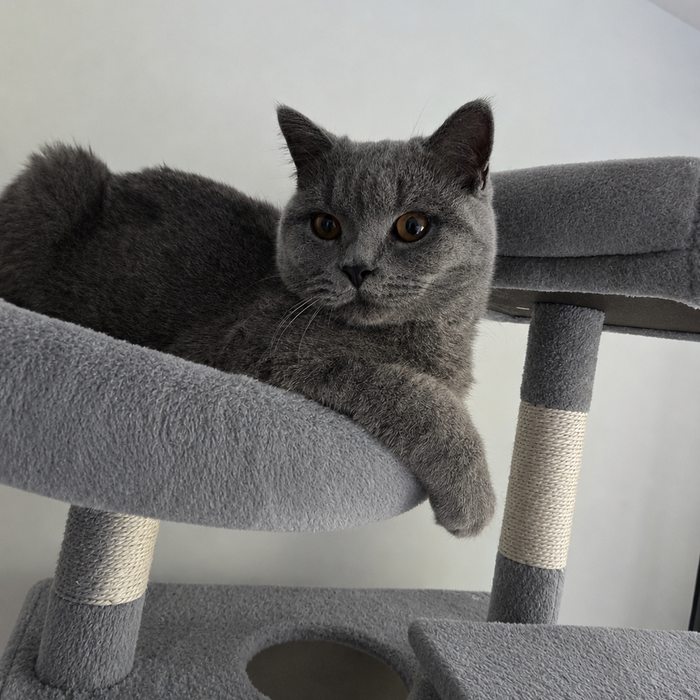
Putting a cat tree into storage is easier when you plan for the day it comes out again. Keep the instructions, identify the components and choose conditions appropriate for its materials. Avoid treating a damp garage corner as the default home for upholstered furniture.

Check the intended disassembly method
Find the instructions for the exact model. Photograph the assembled piece and label components in a way that will not damage their finish. Do not force glued or fixed sections apart because another tower can be flat-packed. If the method is unclear, ask before dismantling.
Keep hardware with a clear record
Bag the correct fixings for each stage and label the bags to match your photographs. Keep them secure, away from pets and children. Include the model details and instructions in the same storage record. A bag of mixed screws may be difficult to identify months later.
Clean appropriately and let materials dry
Follow the product's care instructions before packing. Avoid sealing freshly cleaned, still-damp fabric into plastic. Check the proposed storage space for leaks, condensation and signs of pests. Support the components so heavy sections are not pressing into soft pads or distorting a lighter panel.
Inspect before reassembly
Unpack in a place where you can see every surface and connection. Investigate odour, damp patches, deterioration or missing parts before rebuilding. Reassemble only as instructed and complete the stability and fixing checks before the cat has access. Storage does not reset wear that was already present.
Keep the current product record with your furniture documents. If the piece no longer suits the next room, compare the tower collection or discuss a bespoke layout.