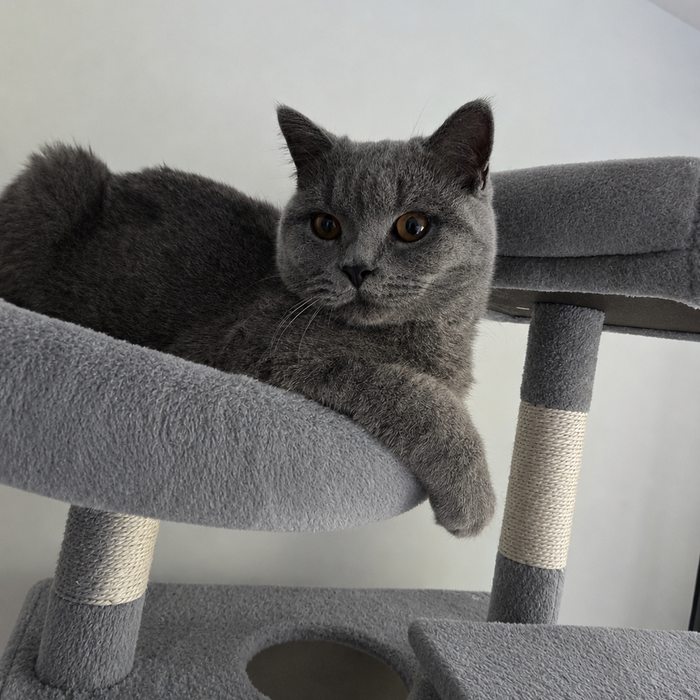
Turkish Vans are often described as active, substantial cats. That reputation is a useful introduction to the breed, but it cannot tell you the size, confidence or furniture preferences of an individual.
Size and temperament
TICA’s Turkish Van introduction describes a semi-longhaired breed known for intelligence and activity. Some cats may be curious about water, but the “swimming cat” nickname is not a reason to put a cat into water or assume it enjoys bathing.
Measure your cat rather than relying on an unsourced kilogram range. Weight helps you compare stated load limits, while body dimensions and resting habits determine usable space. A leaner-looking coat does not prove that a smaller platform will fit.
Choose a useful layout
Provide opportunities for play, scratching, rest and observation that suit your cat’s interests. For a tree or perch, check:
- The usable platform area inside raised edges.
- Step spacing and a comfortable route both up and down.
- Entrance and turning space in any enclosed section.
- The exact model’s load limits, installation requirements and maintenance guidance.
Do not derive a load rating from a breed’s jumping reputation or add an invented impact multiplier. A broad base or tall silhouette alone cannot establish safe use.
Compare products with your home
Check the full footprint, projecting parts and surrounding clearances before ordering. Keep access routes usable and observe whether the cat prefers elevated or lower resting places. Reassess fit and access as a kitten grows or mobility changes.
Use our measurement guide when browsing cat towers and trees. Ask for missing platform or entrance dimensions before assuming a product suits your Turkish Van.
Care alongside furniture
Offer gentle coat care and ask your vet about new grooming difficulties, reduced activity or discomfort. Furniture can support an appropriate home setup, but cannot diagnose or treat a change in health.