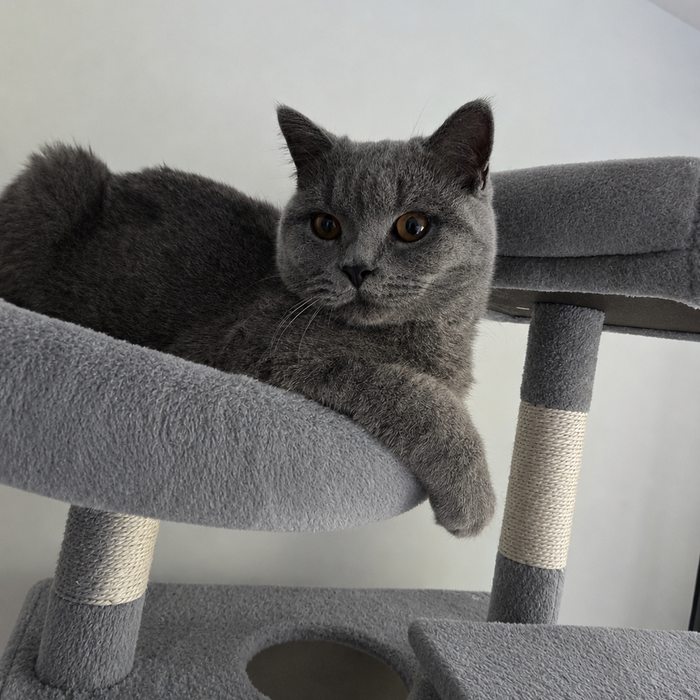
A fuzzy or untidy sisal surface does not automatically mean a scratching post is unsafe. Stop using it, however, when the covering has come loose enough to form loops or moving lengths, a sharp fixing or damaged core is exposed, or the post, platform or base no longer remains secure as designed.
The useful decision is not whether the post still looks new. It is whether the wear is confined to the replaceable scratching surface or is affecting safe use of the complete piece.
Begin with the post out of use
Keep your cat away while checking an uncertain item. Place it where you can see the whole base, post, top and every joint without encouraging a test scratch. If it is part of a tower, do not let a cat climb the other levels while you inspect a structural concern.
Compare the item with its supplied assembly and care instructions. A photograph from the day it arrived can help you identify what has changed, but it does not replace the manufacturer’s requirements.
Separate four different kinds of wear
1. Surface fibres
Short, rough fibres and a visibly used patch can be cosmetic surface wear. Note where it is concentrated and whether the covering remains firmly attached. Appearance alone cannot establish the remaining service life.
2. Loose wrapping
A section that rotates, slides or lifts away from the post needs a different response. Do not trim, glue or staple it back without model-specific approval. A loose loop or end may move as the cat scratches, so remove the item from use and ask for the correct remedy.
3. Exposed parts
Stop use if wear reveals a sharp fastener, broken edge, damaged internal material or another part that was intended to remain covered. Do not add a decorative outer wrap simply to hide an unknown condition underneath.
4. Structural movement
Check whether the post rotates unexpectedly, the base rocks, a platform moves or a joint will not remain secured as the instructions specify. Surface replacement does not resolve damage to a load-bearing part. Our guide to cat-tower movement explains why wobble needs its own investigation.
Photograph the problem before changing anything
Take one picture of the complete item, another showing the worn section in context and a close-up of the affected area. Record the product name, selected option, order reference if available and what moves or feels loose. Avoid dismantling a sound joint merely to produce another photograph.
For Scratch Central, the current listing specifies a 60cm overall height, a 35 × 35cm base and a sisal-wrapped post. It also includes a top platform, two dangling balls and a ball track. Check those components separately rather than describing the whole item simply as “worn”.
Ask whether the correct part is replaceable
Send the photographs and exact model details to the supplier. Ask whether the scratching covering or complete post has an approved replacement, what fittings are required and which instructions apply. A similar-looking post is not necessarily compatible: length, connection, internal construction and intended position can differ.
Do not wrap over a damaged support or substitute a fixing because it appears to fit. If the manufacturer cannot confirm an appropriate repair for a structural problem, keep the furniture out of use while deciding on replacement.
Use one clear decision record
- Surface remains attached; no sharp or damaged part; structure remains secure: record the wear and continue the checks required by the instructions.
- Covering is loose, lifting or forming moving lengths: stop use and request approved repair or replacement guidance.
- A sharp fixing, broken core or structural movement is present: stop use and treat it as a safety concern rather than cosmetic wear.
For the wider decision, read Repair or Replace a Cat Tree? You can also compare the current Giant Paws furniture that explicitly lists sisal without assuming that every model uses interchangeable parts.