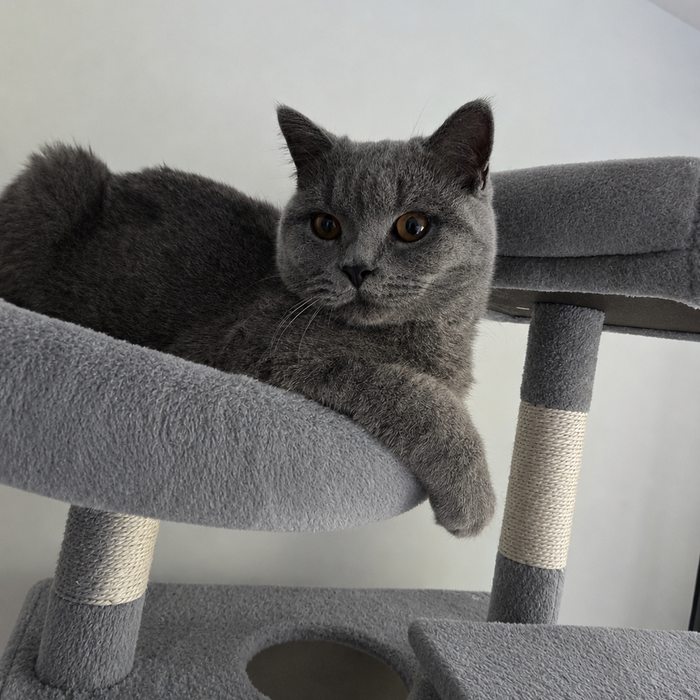
Bengals are often described as active, muscular cats, but that does not mean every Bengal needs the tallest tower or behaves the same way. Start with your cat’s size, preferred activities and current mobility, then choose furniture and a daily routine around those observations.
Bengal size: useful context, not a furniture size chart
TICA’s Bengal profile gives approximate adult weights of 6–12 lb for females (about 2.7–5.4 kg) and 9–15 lb for males (about 4.1–6.8 kg). It describes a muscular breed that reaches full size around two years. These broad figures are not ideal-weight targets or a prediction of your kitten’s final measurements.
Weight alone does not show whether a bed or platform fits. Measure the usable resting area, entrances and access steps against the individual cat. If you are concerned about weight or growth, ask your vet to assess body condition rather than deciding from the breed range.
Make room for activity and downtime
TICA highlights Bengals’ curiosity and need for enrichment, while recognising variation between busy, outgoing cats and quieter individuals. Plan opportunities for interaction, exploration and rest. Avoid treating vocalising, scratching or knocking things over as proof of boredom: the context matters, and new or persistent changes may need veterinary or qualified behaviour advice.
Keep a simple note of the places your Bengal chooses to scratch, play and sleep. It can help identify whether the missing resource is a scratching surface in a useful location, a reachable perch, a quiet retreat or more time for interactive play.
Compare towers by the route through them
- Usable platforms: check actual resting surfaces, allowing for posts and raised edges.
- Access: look at the first step, transitions between levels and descent. Include reachable lower options.
- Installation: follow the selected model’s load limits, fixing requirements and instructions for suitable surfaces.
- Space: measure the full assembled footprint, including projections, and leave the necessary clearance.
Two enclosed beds on one tower do not guarantee separate territory in a multi-cat home. Consider whether each cat can reach preferred resources without being blocked by another cat. An enclosed bed also needs an opening and interior that suit the cat using it.
Choose equipment for a specific need
Use the Giant Paws size guide to prepare your measurements before browsing cat towers and trees. Ask for missing details rather than relying on breed marketing or a photograph. There is no single tower height, daily play duration or product combination that suits every Bengal.
Introduce new equipment gradually and let your cat choose to investigate. If it is unused, review location, access and preferences before concluding that you need a bigger or taller replacement.
Frequently asked questions
How big do Bengal cats get?
TICA gives approximate adult weights of 6–12 lb for females and 9–15 lb for males, about 2.7–5.4 kg and 4.1–6.8 kg respectively. These are breed descriptions, not ideal-weight targets or furniture measurements.
Do all Bengals need the same enrichment?
No. Breed tendencies can help with planning, but activity, preferences and mobility vary. Observe the individual cat and offer suitable choices for play, scratching and rest.
Does unwanted behaviour mean my Bengal needs a taller tower?
Not necessarily. Review the context, resource access and daily routine. New or persistent changes may need veterinary or qualified behaviour advice rather than an automatic furniture purchase.