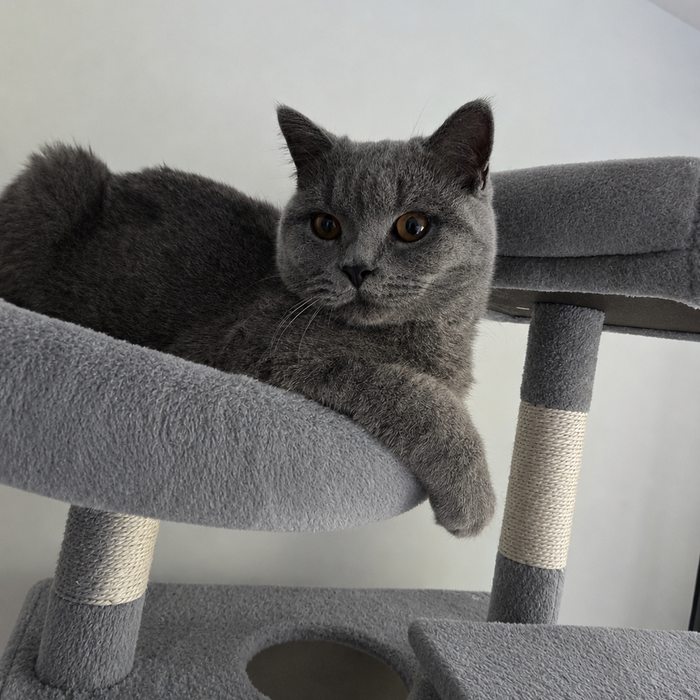
Do not choose cat furniture by the words “tower” or “tree” alone. Neither name tells you the usable perch size, entrance dimensions or installation requirements. Compare the actual design with your cat and your room.
Compare features, not the label
Listings under either name can include platforms, enclosed cubbies, hammocks and scratching posts. A tower is not automatically wider or stronger than a tree. Product photographs help you understand the layout, but measurements and instructions are needed to assess a particular model.
A practical checklist for large cats
- Resting space: measure the usable surface inside raised edges. Compare it with the space your cat occupies in its preferred resting positions; a curled sleeping spot and a stretched lounging area serve different purposes.
- Enclosed spaces: check both the entrance and the interior. Overall tower dimensions do not establish whether a cubby fits.
- Access: consider the distance between levels and how your cat will get down. International Cat Care describes steps and ramps as ways to improve access to favourite resting places when mobility is limited.
- Installation: obtain the assembly instructions, anchoring requirements and any stated load limits. A base-to-height ratio or a material name alone does not certify stability.
- Upkeep: check how joints, coverings and replaceable parts should be inspected and maintained.
Use our size guide to organise your measurements. If a necessary measurement or rating is missing, ask for it before ordering.
Compare Giant Paws designs
Start with the cat towers and trees collection and the Ultimate PawHouse product page. Compare the arrangement of resting and scratching areas, the footprint and the current product details. Breed labels do not replace an individual fit check.
If your cat ignores the furniture
Size is one possibility, not a diagnosis. Review its location, access and your cat’s existing preferences. Avoid assuming that every unused perch is too small or that every cat wants the highest available spot.
Source: International Cat Care: changes to the home environment.
FAQs
Is a cat tower or cat tree better for a Maine Coon?
Neither name guarantees suitability. Compare usable resting areas, entrances, access and the model’s installation instructions with your individual cat and home.
Does every perch need to fit a fully stretched cat?
Assess each area for its intended use and your cat’s preferences. A curled sleeping spot and a stretched lounging area are different; check usable measurements rather than the overall product width.