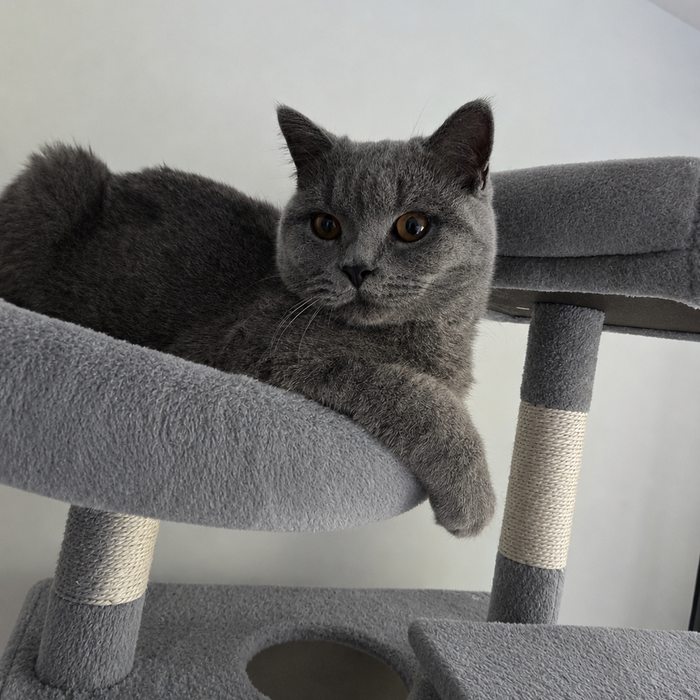
A large cat needs a bed that fits its body and preferred resting position. It does not necessarily need a product labelled “special”, “giant” or “orthopaedic”. Compare the actual sleeping area, entry and care instructions.
Measure the usable sleeping area
Watch how your cat chooses to rest: curled, stretched, leaning against a side or tucked into a hideaway. Measure that occupied space and compare it with the bed’s interior, excluding thick bolsters. Do not assume all large breeds prefer to sprawl or that every bed needs to serve every sleeping position.
Assess access and cushioning
Check the entry height and whether the bed stays in place on its intended surface. Filling type alone does not establish joint support or a medical benefit. If your cat has mobility difficulties, discuss its needs with your vet. International Cat Care’s home-modification guide describes ways to make resting places more accessible, including steps and ramps.
Compare care and construction
- Check washing instructions for the cover and filling separately.
- Inspect seams, loose threads and any damage during use.
- Ask whether covers or inserts are replaceable.
- Use the maker’s specifications rather than assuming a higher price or denser filling guarantees durability.
Explore the options
The Velvet Nest is a plush rectangular bed. Compare its current size options and usable interior with your cat’s measurements. Browse the beds and comfort collection for other resting arrangements, and use the size guide before ordering. A product name or breed recommendation cannot replace that fit check.
Frequently asked question
Do Large Cats Need Special Beds?
They need a bed that fits their body, preferred resting position and access needs. A special label is not essential, and filling density alone does not prove joint support. Compare usable measurements and care requirements.